Refreshing Your Sitting Room: A Complete Guide to Walls, Ceiling and Woodwork
Thinking about sitting room painting in Newark-on-Trent? We cover prep, colour choices, finish options and what the job really involves. Serving Newark and surrounding villages.

Your Sitting Room Deserves Better Than a Rushed Coat of Paint
A tired sitting room has a way of dragging the whole house down. You stop noticing it after a while, and then one day the light catches the walls at just the right angle and you realise it's been years. That's usually the moment people pick up the phone.
We do a lot of sitting room painting across Newark-on-Trent and the surrounding villages, from Balderton and Fernwood to Collingham and Farndon. Every job is different, but the things that matter are always the same: proper preparation, the right products, and a finish that still looks good in five years.
This article walks you through what's actually involved, what you should think about before booking, and how to get the most out of a sitting room repaint.
Preparation Is Where the Real Work Happens
People sometimes assume painting a sitting room is mostly about rolling paint on walls. It isn't. A good finish is almost entirely down to what happens before the lid comes off the tin.
When we arrive at a job in Newark or one of the nearby villages, the first thing we do is assess the surfaces. Older properties, particularly the Victorian and Edwardian terraces you find around the town centre, can have plaster that's had a hard life. Hairline cracks, blown sections, old filler that's shrunk and failed. All of that needs sorting before we prime or paint anything.
Here's what preparation typically involves on a sitting room job:
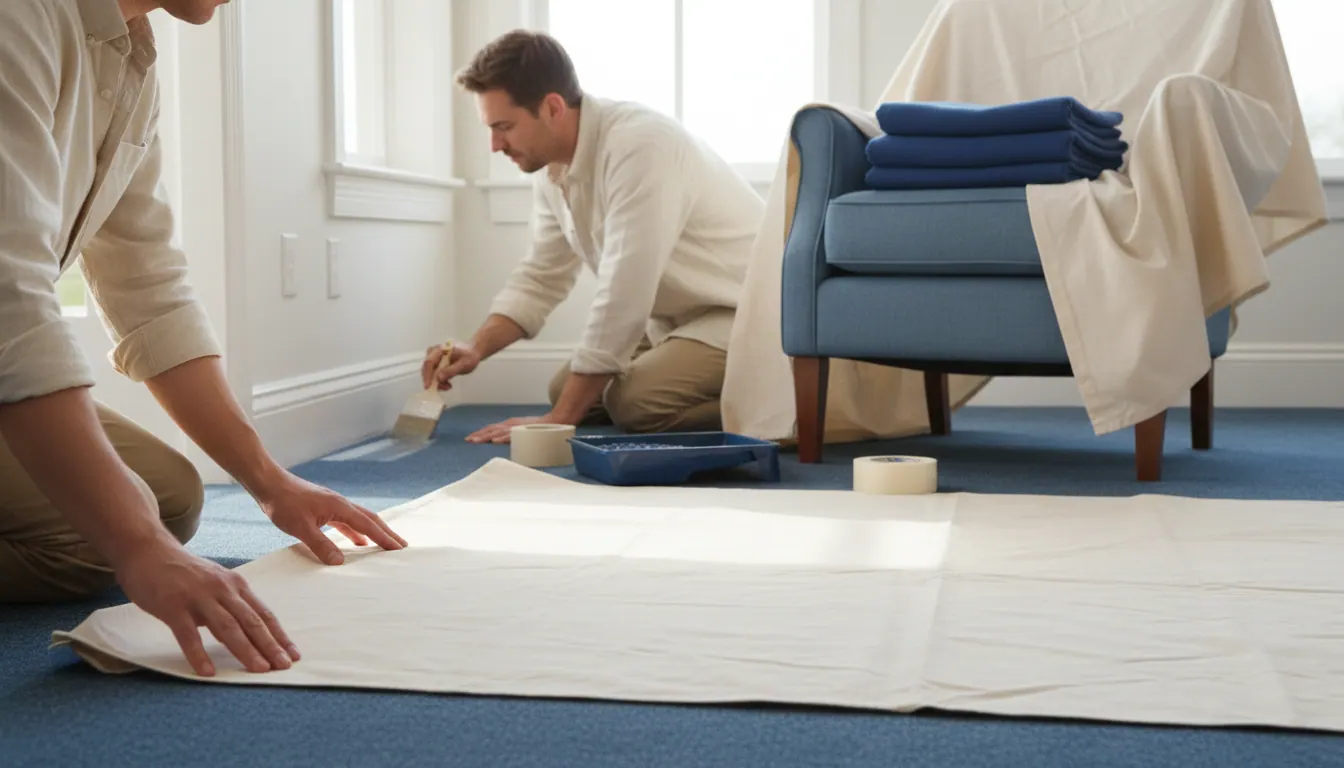
- Moving furniture to the centre of the room and sheeting everything down
- Filling cracks, holes and imperfections in walls and ceilings
- Sanding back any rough patches or old flaking paint
- Applying a mist coat or primer where needed, especially on fresh plaster
- Masking around woodwork, sockets and switches
We leave everything clean and tidy at the end of each day. You'll be able to use your room in the evenings while work is ongoing.
Choosing the Right Paint for a Sitting Room
The sitting room is usually the room where you spend the most time, so it's worth thinking carefully about the finish, not just the colour.
Emulsion for walls and ceilings. Most sitting rooms do well with a good quality matt emulsion. It hides minor surface imperfections better than a silk or satin finish, and it tends to look more considered. If you've got young children or pets and you're worried about marks, an eggshell or wipeable matt is worth considering.
Woodwork. Skirting boards, door frames, architraves and window sills all benefit from a hard-wearing finish. We typically use a water-based satin or gloss on woodwork. It dries faster than oil-based products, has less smell while we're working, and the finish is excellent. If you want to know more about the detail involved in getting woodwork right, our article on glossing woodwork without splashes covers exactly that.
Ceilings. A flat white ceiling emulsion is nearly always the right call. It bounces light around the room without drawing the eye upward.
Colour: A Few Honest Thoughts
We're painters and decorators, not interior designers, but after years of working in sitting rooms across Newark and Nottinghamshire, a few things have become obvious.
Dark, moody colours work beautifully in sitting rooms with decent natural light and high ceilings. In a smaller room with a single north-facing window, the same colour can feel oppressive. It's worth testing a large sample patch and living with it through different times of day before committing.
Warm neutrals remain popular for good reason. They work with almost any furniture, they don't date quickly, and they photograph well if you're thinking about selling.
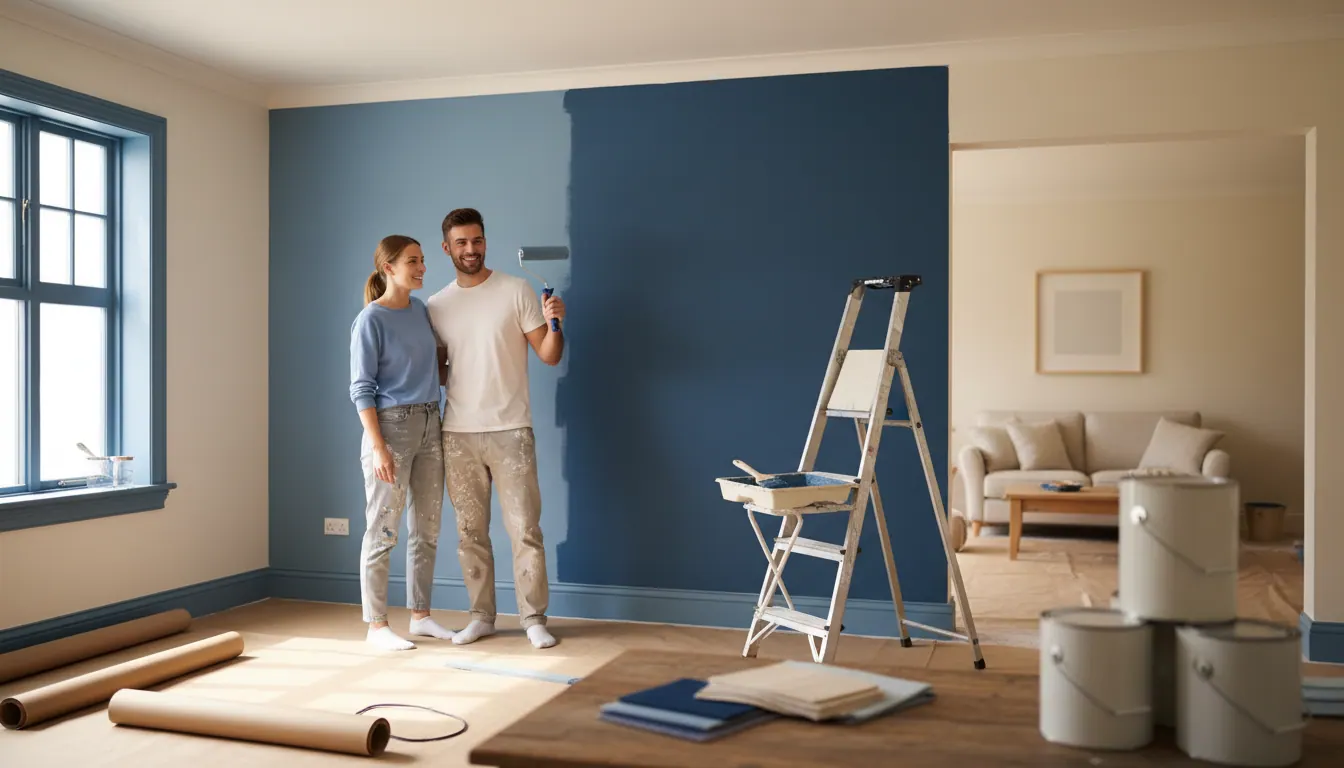
Feature walls are still requested, though less often than they were ten years ago. If you want one, we'll make sure the transition between surfaces is clean and deliberate rather than looking like an afterthought.
What the Job Actually Looks Like Day to Day
Most sitting room repaints take two to three days, depending on the size of the room, the condition of the walls, and whether the woodwork needs stripping back or just a light sand and refresh.
Day one is nearly always preparation: filling, sanding, priming where needed, masking up. It's the unglamorous part, but it's what separates a finish that lasts from one that starts showing its age within a year.
Day two is the main painting. Two coats on walls and ceiling, with time allowed between coats for proper drying. We don't rush this. Cutting in at the edges is done carefully, by hand, so you get a clean line between the ceiling and the wall without relying entirely on masking tape.
Day three, if needed, is woodwork and any touching up. We'll check the finish in different light before we call it done.
What One of Our Customers Said
We recently finished a sitting room job that had been left untouched for years. The customer, Vicky, had been putting it off and was genuinely surprised at how much difference a proper repaint made.
Delighted with the work done by Jon. My sitting room looks transformed and his attention to detail is fantastic. I will definitely be asking him back when it's time do the next room!
That's exactly what we're aiming for every time. Not just a room that looks freshly painted, but one that feels properly finished.
Sitting Room Painting as Part of a Larger Project
A lot of sitting room jobs grow once we're on site. The hall looks tired by comparison. The dining room shares a wall. The woodwork throughout the ground floor needs attention.
If you're thinking about more than one room, it often makes sense to plan the work together. The prep overlaps, the colours can be considered as a scheme rather than in isolation, and the disruption is concentrated into one period rather than spread across several separate visits.
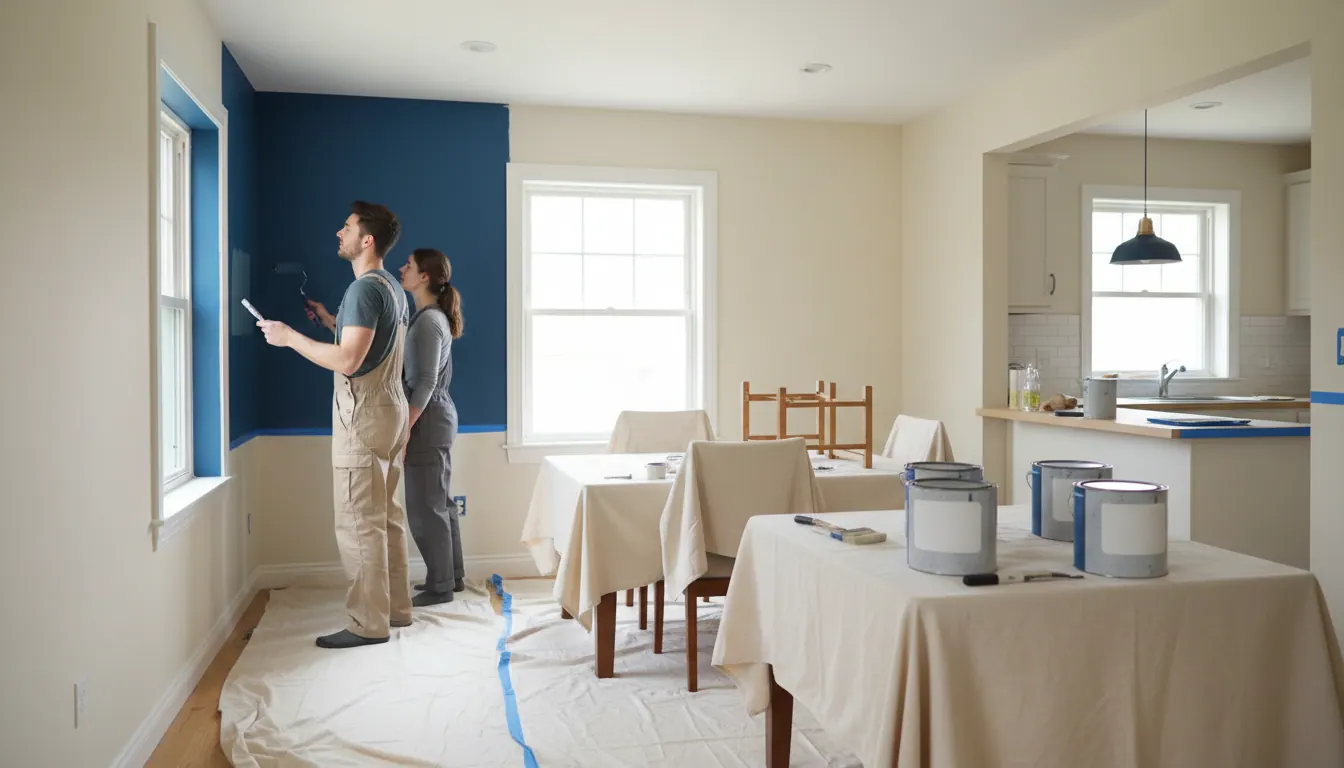
Our article on painting a kitchen and dining room together explains how we approach connected spaces, and a lot of the same thinking applies when a sitting room connects to a hallway or dining area.
We cover the whole Newark area for this kind of work, including Winthorpe, Coddington, Hawton, Elston, Averham and Kelham.
How to Find a Reliable Decorator in Newark-on-Trent
This is worth addressing honestly. There are plenty of people offering painting and decorating in Newark. The question is how you tell a careful, experienced tradesperson from someone who'll cut corners on preparation and be unavailable when you spot a problem three months later.
A few things worth checking:
- Reviews. Read them. Not just the star rating but what people actually say. If the reviews mention prep, tidiness and reliability, that's a good sign.
- Communication. Does the person respond promptly? Do they explain what the job involves before they start? A decorator who communicates well on a quote tends to communicate well throughout the job.
- Public liability insurance. Any tradesperson working in your home should have it. Don't be embarrassed to ask.
- References. We're happy to point you to previous customers in the Newark area if you want to hear directly from people we've worked for.
We don't operate through directories or bidding platforms. Most of our work comes through word of mouth and repeat customers, which is the best measure of whether a decorator is worth trusting with your home.
Frequently Asked Questions
How long does it take to paint a sitting room? For most sitting rooms in Newark-on-Trent and the surrounding villages, two to three days covers the job properly. That includes preparation, two coats on walls and ceiling, and woodwork. A larger room in poor condition, or one where the woodwork needs stripping back, may take a little longer. We'll give you a clear timeline before we start.
Do I need to move all my furniture before the decorator arrives? We'll move furniture to the centre of the room and sheet it down as part of the job. If you have particularly large or fragile pieces, it helps to discuss those in advance. You don't need to empty the room before we arrive.
What's the difference between matt and silk emulsion for a sitting room? Matt emulsion absorbs light and hides surface imperfections better, which makes it the more forgiving choice on older or uneven walls. Silk reflects more light and is slightly more washable, but it also shows any irregularities in the plaster more clearly. For most sitting rooms, we'd recommend a good quality matt unless there's a specific reason to go otherwise.
How do I choose a colour that won't date quickly? There's no guaranteed formula, but warm neutrals and soft mid-tones have shown real staying power. Avoid anything that's very on-trend right now if longevity matters to you. We're happy to talk through options when we visit for a quote, and we'd always suggest testing a large sample on the actual wall before committing to a full room.
Ready to Get Your Sitting Room Sorted?
If your sitting room has been on the to-do list for too long, get in touch and we'll come and have a look. No hard sell, no vague estimates. Just a straightforward conversation about what the job involves and what it'll take to get it done properly.
We work across Newark-on-Trent, Balderton, Farndon, Coddington, Fernwood, Winthorpe, Collingham, Hawton, Elston, Averham and Kelham. Call us on 07845 176906 and we'll arrange a convenient time to visit.