Painted Kitchen Cabinets vs. a Full Refit: How a Decorator Can Refresh Your Kitchen the Smart Way
Thinking about painted kitchen cabinets in Newark? JPL Paint Services explains what's involved, what paint works best, and what results to expect.

Painted Kitchen Cabinets in Newark: A Genuinely Useful Guide
A full kitchen replacement is a big undertaking. New units, new worktops, the mess, the weeks without a working kitchen. For a lot of homeowners in Newark-on-Trent, it simply isn't necessary. If the carcasses are sound and the layout works, painting the cabinet doors and frames is often the most sensible thing to do.
I've repainted kitchens across Newark and the surrounding villages, from older terraces in Balderton to semi-detached homes in Fernwood, and the same question comes up every time: "Can it really look that different?" The honest answer is yes, significantly. The right preparation and the right paint make a kitchen feel like a completely different room.
This guide covers what's actually involved, what paints I use and why, the colours Newark homeowners are choosing right now, and what you should realistically expect from the process.
What "Painting Kitchen Cabinets" Actually Means
It's worth being clear about what this job involves, because it's not the same as painting a wall.
Cabinet painting means working on:
- Door fronts and drawer fronts
- Cabinet frames and exposed carcass sides
- Plinths and cornicing if fitted
- Sometimes the walls, ceiling and woodwork around them for a cohesive finish
The surfaces are different from walls. They take knocks, they get wiped down, they're near steam and grease. That means the preparation and the products have to be right. A standard emulsion will not last. I use specialist cabinet and furniture paints, or hard-wearing eggshell and satin finishes depending on the substrate, applied with the right tools to give a smooth, even result that can handle daily use.
Preparation Is Where the Job Is Won or Lost
This is the part that makes the difference between a finish that looks great for years and one that starts peeling within months.
Before any paint goes on, I:
- Clean all surfaces thoroughly to remove grease and cooking residue
- Sand back to create a key for the new paint to bond to
- Fill any chips, dents or hairline cracks
- Apply the appropriate primer for the substrate
That last point matters more than most people realise, which brings me to a question I get asked regularly.
Do You Need Primer on Already-Painted Cabinets?
Yes, in almost every case. Even if the existing paint is in reasonable condition, a primer helps the new topcoat bond properly and gives you a consistent base colour to work from. If you skip it, you risk uneven coverage, the new colour not reading true, and the finish not adhering as well over time.
The type of primer depends on what's already on the surface. MDF doors need a different approach to solid wood or thermofoil. Glossy surfaces need either a fine key sanded in or a specialist adhesion primer. I assess each kitchen individually before deciding what's needed, because there's no single answer that works for every job.
What Paint Should Be Used on Kitchen Cabinets?
This is one of the most common questions, and it's a fair one because the choice is genuinely important.
For most kitchen cabinet work I use specialist furniture and cabinet paints or a hard-wearing satin or eggshell finish. The key properties to look for are:
- Hardness once cured. Kitchen doors take daily contact. The paint needs to be tough enough to resist scratching and chipping.
- Washability. Kitchens get splashes and finger marks. You need to be able to wipe the surface clean without lifting the paint.
- Low or no sheen variation. A good satin or eggshell finish hides minor imperfections better than full gloss while still being practical and wipeable.
Standard wall emulsion is not suitable. Water-based gloss is fine for skirting boards and architraves but not always the best choice for cabinet doors, which flex slightly when opened and closed. I'll always advise on the best product for your specific cabinets once I've had a look at the job.
Colours Newark Homeowners Are Choosing Right Now
The most popular choices I'm seeing across Newark and the villages at the moment reflect a shift away from the stark white kitchens that dominated the last decade.
White and off-white. Still the most requested, but the preference has moved toward warmer whites and soft chalky tones rather than pure brilliant white. They work well in Newark's older properties, where the light tends to be warmer and period features benefit from a softer backdrop.
Greys. Mid-tone and warm greys remain popular, particularly in newer builds in Fernwood and Coddington. Cool blue-greys suit kitchens with good natural light; warmer greige tones work better in north-facing or smaller kitchens.
Sage green and muted greens. These have moved from being a trend to feeling genuinely established. A soft sage on cabinet doors with white walls and natural wood worktops looks calm and considered, and it suits the kind of period semis and Victorian terraces you see across Balderton and Farndon particularly well.
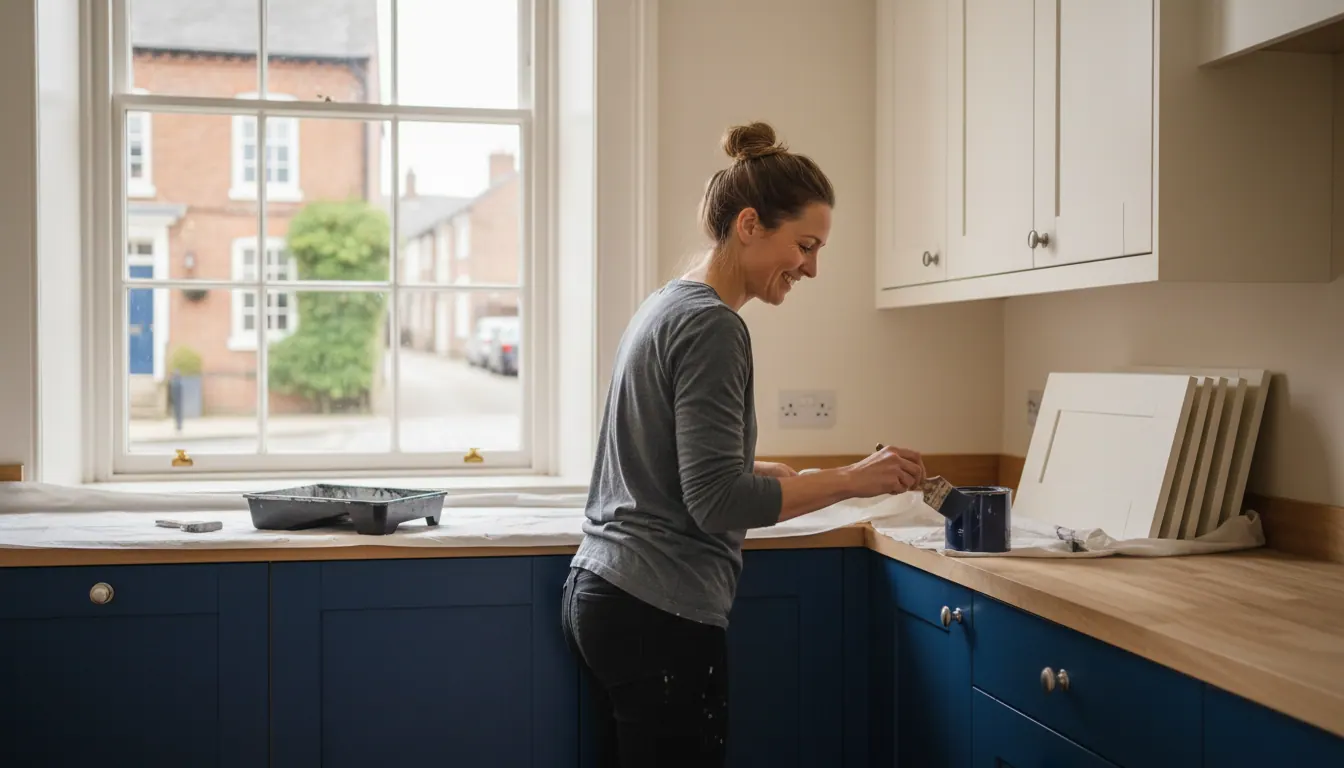
Heritage blues and navy. A deeper blue on a kitchen island or lower cabinets with lighter uppers is a combination that keeps coming up. It's bolder, but done well it's striking rather than overwhelming.
If you're unsure which direction to go, it's worth thinking about the light in your kitchen, the colour of your worktops and floor, and what tone you want the room to feel. I'm happy to talk through options when I come to look at the job.
What a Real Kitchen Job Looks Like
Ellen Springett had her kitchen done and left this review:
"Thankyou for doing our kitchen , Jon is a lovely guy did a fantastic job very clean and tidy and respectful of our home , will definitely have Jon to do our other jobs when needed , Thankyou"
That word "respectful" matters to me. Your kitchen is the heart of the house. I sheet everything down before I start, I work cleanly, and I leave the space in a better state than I found it. There are no splashes on your floor, no paint on your worktops, and no mess left at the end of the day.
Walls, Ceiling and Woodwork: Getting the Full Picture Right
Painting the cabinets alone can sometimes highlight how tired the rest of the kitchen looks. A lot of homeowners decide, once the cabinets are done, that they want the walls and ceiling refreshed too. It makes sense to do it all together, and it's something I plan for at the quoting stage.
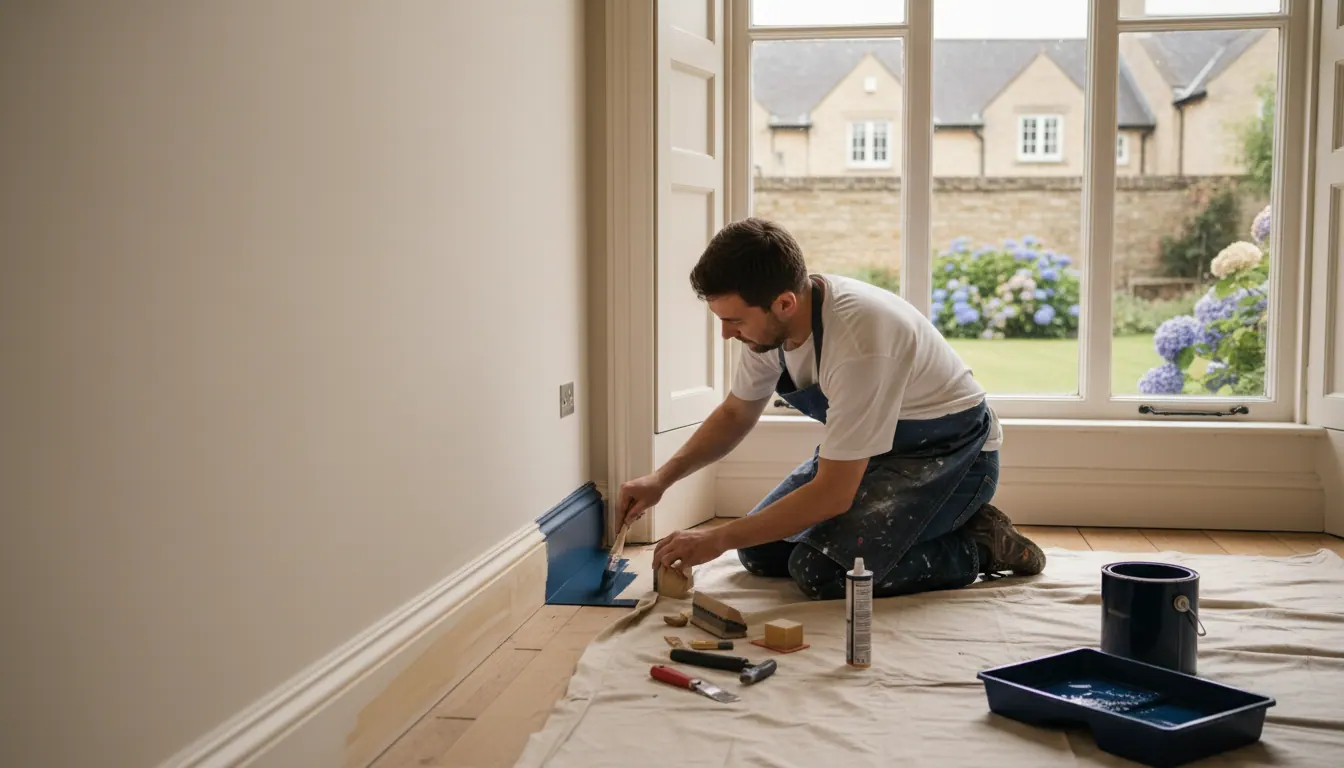
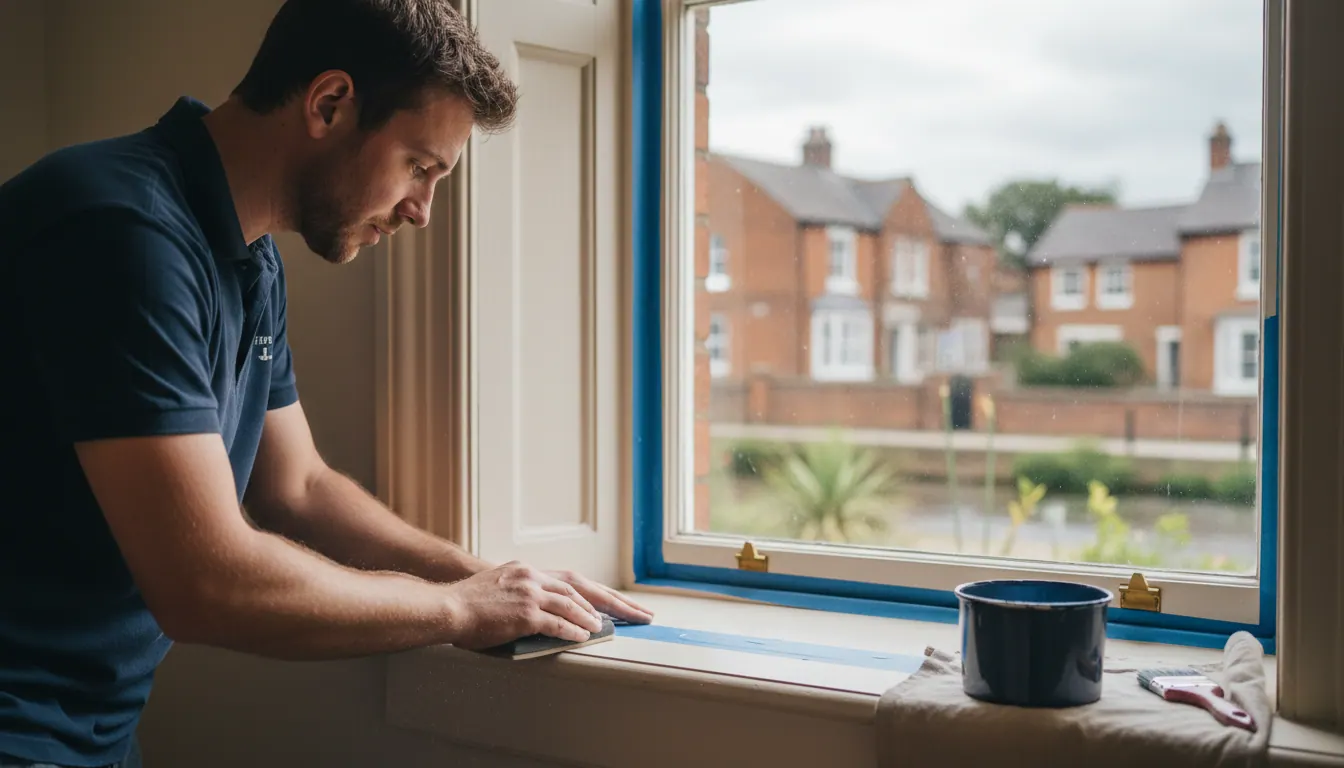
The skirting boards, door frames and window reveals in a kitchen take a lot of wear. If they're chipped or yellowed, freshening them up with a hard-wearing satin finish alongside the cabinet repaint ties the whole room together. For more detail on how a kitchen and dining room repaint works as a combined project, take a look at our guide on painting a kitchen and dining room together.
Is Cabinet Painting Right for Your Kitchen?
It's worth being honest: painting cabinets is not always the right solution. If the doors are warped, the carcasses are damaged, or the kitchen is genuinely at the end of its life, painting over the problems won't fix them.
But if your kitchen is structurally sound and the main issue is that it looks dated or tired, a repaint is a very practical option. The disruption is far less than a full refit, you keep your existing layout, and the result can be remarkable.
I cover a broader version of this question in the article on refreshing a tired kitchen with paint, which goes into more detail about what to expect from the process.
Frequently Asked Questions
What kind of paint is best for kitchen cabinets in Newark homes? For most kitchens I use specialist cabinet paints or hard-wearing satin and eggshell finishes. They need to be tough enough to handle daily use, steam and regular wiping. Standard emulsion is not suitable. The right product depends on your cabinet material, the existing finish and the colour you're going for, which is why I assess each job before recommending anything.
Do I need primer if my cabinets are already painted? Almost always, yes. Primer helps the new paint bond properly to the existing surface, gives you a consistent base and improves the durability of the finish. The type of primer varies depending on what's on the surface already. MDF, solid wood and thermofoil doors each need a slightly different approach.
What colours work well for painted kitchen cabinets in Newark's older properties? Warm whites, soft greys, sage greens and heritage blues tend to suit the period semis and terraces common across Newark, Balderton and Farndon. Cooler tones can look harsh in kitchens with limited natural light. I'm happy to talk through what might work in your specific kitchen when I come to have a look.
Can you paint just the cabinet doors, or does the whole kitchen need doing? You can paint just the doors and drawer fronts if the frames are in good condition. More often, homeowners choose to include the frames and carcass sides for a consistent finish. Adding the walls, ceiling and woodwork is optional but tends to give the most cohesive result. I'll give you a clear picture of the options when I see the kitchen.
Get in Touch
If you're thinking about painted kitchen cabinets in Newark, Winthorpe, Collingham, Kelham or anywhere else in the area, I'm happy to come and have a look at what you've got and talk through what's possible. No pressure, just a straightforward conversation about the job.
Call Jon on 07845 176906 to arrange a visit.