Refreshing a Tired Bathroom in Newark: Walls, Ceiling and Woodwork in a Damp Room
Thinking about bathroom painting in Newark? JPL Paint Services covers Newark-on-Trent and surrounding villages. Here's what preparation and the right finish actually involve.

Bathroom painting in Newark: why it needs a different approach
Bathrooms are the room most people put off. The space is small, the surfaces are awkward, and there is always the nagging worry that any paint you put up there will just peel off within a year. That concern is completely understandable, and it is usually not about the paint itself. It is about preparation and ventilation, and whether the right product ended up on the right surface.
I cover bathroom painting across Newark-on-Trent and the surrounding villages, including Balderton, Farndon, Winthorpe, Coddington and further out to Collingham and Sutton-on-Trent. Whether it is a compact bathroom in a Victorian terrace off Barnby Gate or a modern en suite in a newer build in Fernwood, the principles are the same.
This article walks through what a proper bathroom repaint actually involves, what makes bathrooms harder than other rooms, and what you should expect from a decorator who knows what they are doing.
Why bathrooms fail faster than other rooms
Steam, condensation and poor ventilation are the real culprits. Every time someone has a hot shower or a bath, moisture rises and settles on walls and ceilings. If the paint underneath was not the right type, or if it was applied over a surface that was not properly cleaned and keyed, it will start to lift. You will see it first at the corners and around the ceiling line.
Older properties in Newark and in villages like Averham and Kelham often have bathrooms with very little natural ventilation. Small frosted windows that do not open far, no extractor fan, or an extractor that has not worked properly in years. That environment is genuinely hostile to paint, and it means the preparation stage matters more here than almost anywhere else in the house.
A few things that make a real difference:
- Cleaning the surface properly before anything else. Any mould, mildew or soap residue needs to come off completely. Painting over it just traps it underneath and the problem comes back faster.
- Using a mould-inhibiting primer on any affected areas. Not just painting over with a standard emulsion and hoping for the best.
- Choosing the right finish. Bathroom-specific paints or moisture-resistant emulsions are formulated to handle the damp. Standard matt emulsion is not.
- Allowing proper drying time between coats. Rushing this in a damp room means the second coat traps moisture from the first.
Ceilings: the part that gets forgotten
Bathroom ceilings take the worst of the steam. They are the first place to show mould spotting, and they are often the last thing people think about when they decide to freshen the room up.
If your ceiling has any dark spotting, that needs treating before any paint goes on. I use a mould-resistant treatment first, let it do its job, then apply a specialist bathroom ceiling paint. The finish is usually flat or very low sheen, which helps it blend with the walls without looking clinical.
If there is any flaking or blown plaster around the ceiling rose or in corners, that needs making good before painting. I am not a plasterer, so if there is significant structural damage I will be straight with you about that. But minor surface repairs, filling small cracks and rubbing back loose edges, that is all part of the preparation before a coat goes anywhere near the wall.
Woodwork in bathrooms: doors, frames and skirting boards
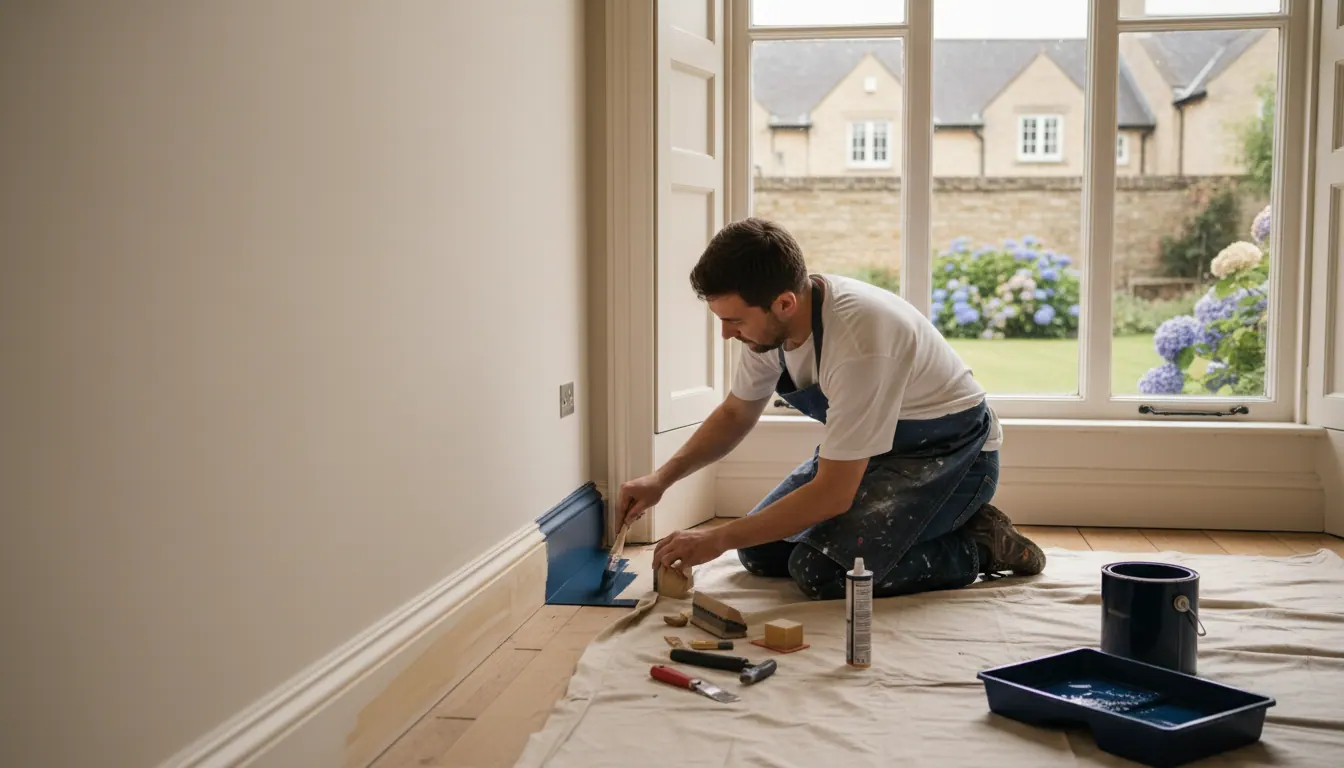
Bathroom woodwork takes a battering. The skirting boards and door frames are exposed to the same damp air as the walls, and if they were painted with a standard oil-based gloss years ago, they may have yellowed or be flaking at the edges.
The good news is that refreshing the woodwork makes a disproportionate difference to how the whole room looks. A clean, crisp line between the wall colour and the skirting board lifts the finish enormously.
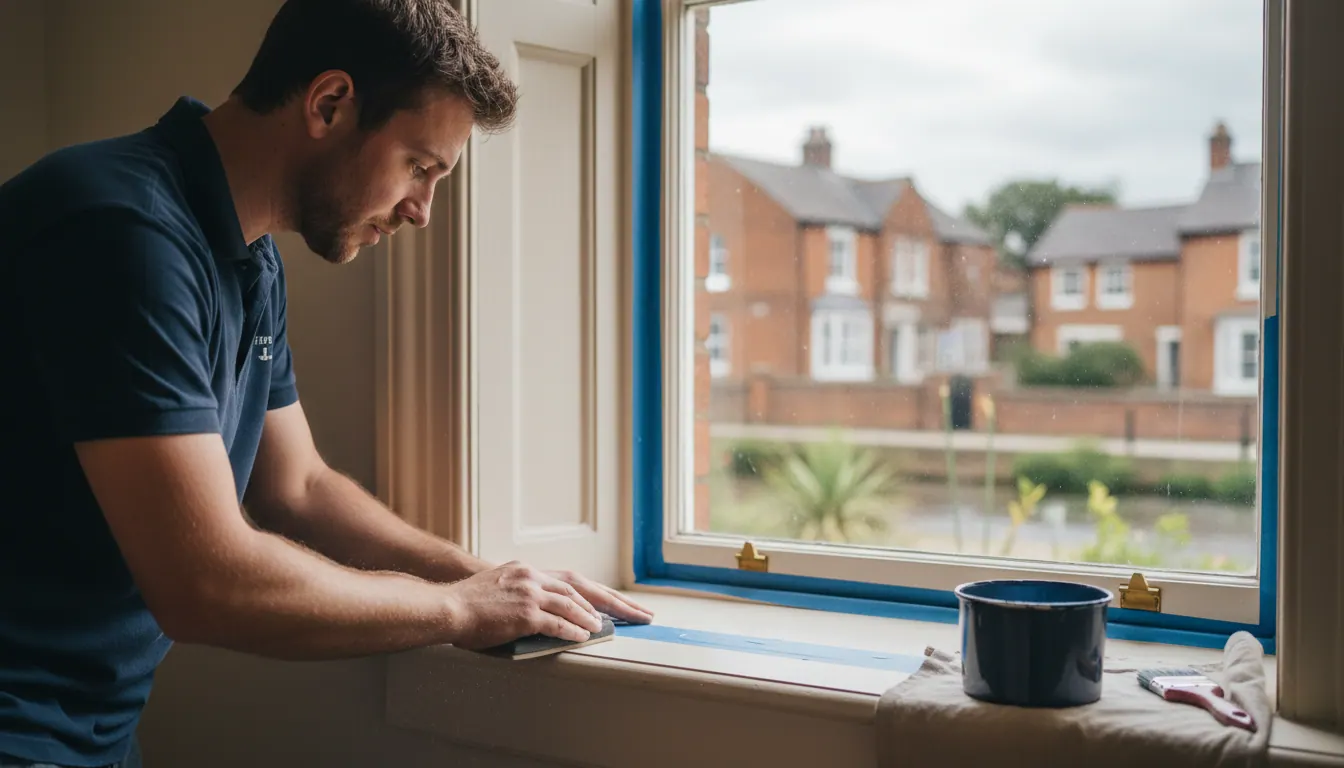
For bathroom woodwork I typically use a satin or eggshell finish rather than a high gloss. Gloss can look harsh in a small space and shows every imperfection in the surface. Satin is more forgiving, wipes down easily and still has enough sheen to look smart. The preparation is the same regardless: rubbing back, filling any gaps or dents, and making sure the surface is clean and dust-free before anything goes on.
If you want to read more about why preparation matters so much for skirting boards and woodwork, I have written about that in detail here: Painting Skirting Boards and Woodwork in Coddington: Why Preparation Beats Speed.
Small spaces: compact bathrooms and how to handle them
A lot of bathrooms in Newark's older terraces and semis are not large. Some are genuinely tiny. That creates a few practical challenges.
First, access. Getting a brush or roller into the corner behind a toilet cistern or above a bath panel without making a mess requires care and patience, not speed. I sheet everything down before I start, which in a bathroom means protecting the bath, the toilet, the floor and any fittings. Nothing gets splashed.
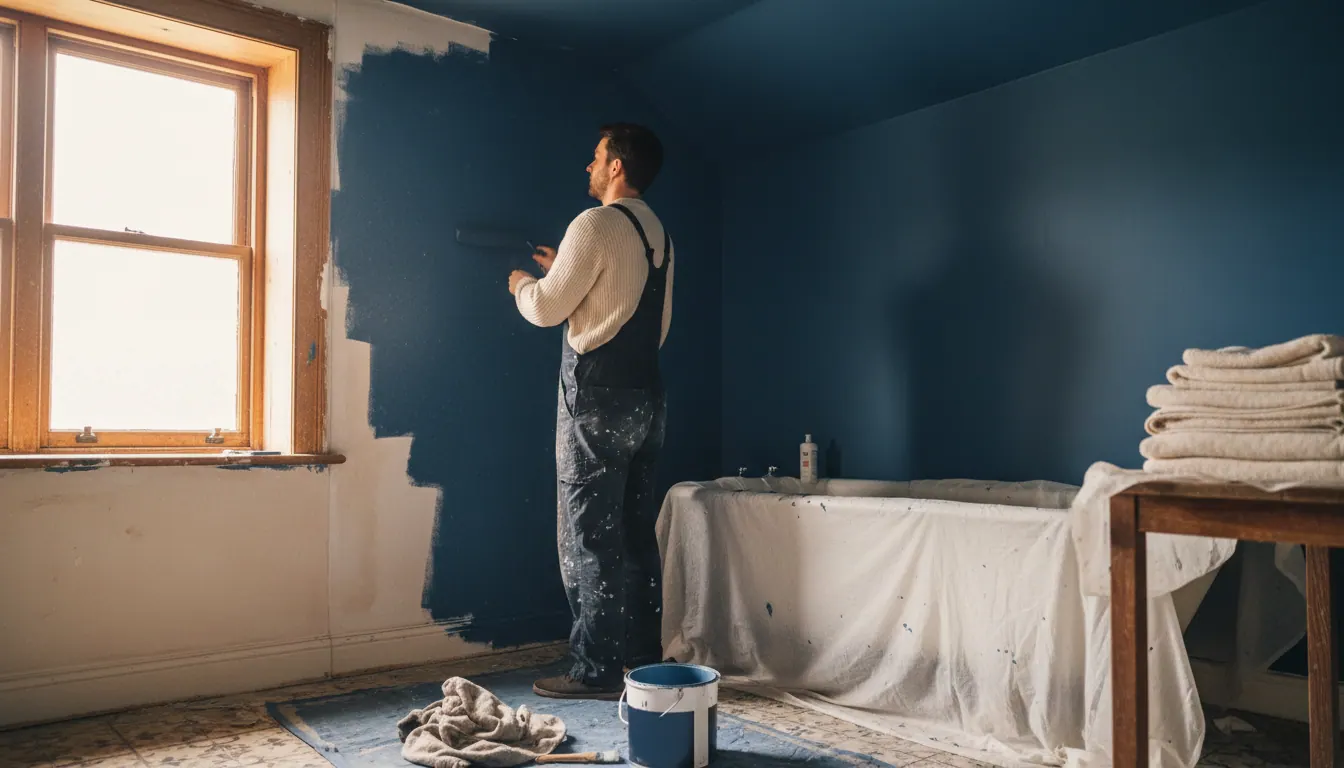
Second, colour choice. In a small bathroom, a very dark colour can feel oppressive if the room has no natural light. But a very pale colour in a north-facing bathroom with a frosted window can feel cold and clinical. The sweet spot is usually a mid-tone with a warm undertone: think soft sage, warm stone or a dusty blue. These work well in bathrooms across Newark's older housing stock because they add warmth without closing the space in.
That said, some people do go for a deep, dramatic bathroom and it can look genuinely stunning. It is entirely your call. My job is to apply whatever you choose to the best possible standard.
What a real customer said
The qualities that matter most in a bathroom job, or any job, are punctuality, tidiness and doing what you said you would do. Pamela, one of my customers, put it well:
"Recently had John to decorate two of our rooms. He was on time, clean and friendly. Also, he kept to the price quoted, which isn't always the case! It's made a big difference to our living room, looks super fresh now."
That is what I aim for every time. You know I am coming, I turn up, I sheet everything down, I do the work properly and I leave the place clean.
Protecting the rest of the house while I work
In a bathroom job I bring dust sheets for the floor and cover the bath and any fittings before I open a tin. In older Newark properties especially, where floorboards, tiles and period fittings are often original, the last thing you want is a splash of paint where it should not be. I take that seriously.
If you want more detail on how I approach sheeting and protecting your home during a decorating job, this article covers it: Protecting Your Home While We Work: Why Sheeting Down and Tidiness Matter in Older Newark Properties.
Frequently asked questions
Can you paint over existing bathroom tiles?
Tile paint exists and it does work in some situations, but I do not offer tile painting as part of my services. What I do cover is all the painted surfaces: walls, ceilings, woodwork, doors, skirting boards and architraves. If you want the tiles refreshed, that is a separate trade.
How do I know if my bathroom has a mould problem that needs treating before painting?
If you can see dark spotting on the ceiling or in the corners, particularly around the ceiling line or behind the toilet, that is mould. It needs treating before any paint goes on. If you just paint over it, it will come back through the new paint within months. I assess the surface before I start and will tell you honestly what needs doing first.
Do you cover villages outside Newark for bathroom painting jobs?
Yes. I work across Newark-on-Trent and the surrounding villages, including Balderton, Farndon, Coddington, Fernwood, Winthorpe, Collingham, Hawton, Elston, Averham, Kelham, Sutton-on-Trent, Claypole and Long Bennington. A bathroom job in any of those villages is no different from one in Newark itself.
What paint finish should I use on bathroom walls?
A moisture-resistant or bathroom-specific emulsion is the right choice for walls. These are formulated to cope with the steam and condensation that a standard matt emulsion cannot handle long-term. For the ceiling, a flat or low-sheen moisture-resistant ceiling paint works best. I will advise on specific products when I come to look at the job.
Ready to get your bathroom sorted?
A bathroom that has been properly painted, with the right preparation and the right products, should stay looking good for years. If yours is peeling, showing mould spotting or just looks tired, it is worth getting it done properly rather than putting it off for another winter.
I work across Newark-on-Trent, Balderton, Fernwood, Claypole, Long Bennington and all the surrounding villages. Fully insured, and I will come and have a look at what needs doing before quoting.
Give Jon a ring on 07845 176906 or visit www.jplpaintservices.co.uk to find out more or get in touch.
“We just had jpl painting to do our decorating. Jon was very friendly and very flexible as having to suddenly leave upstairs and concentrate on my dining room when we found out the carpet fitter was coming sooner than said.he completely did my back room and was equally happy to touch all my doors up…”