Painting a Dining Room in Farndon: Creating a Room That Works for Entertaining and Everyday
Thinking about dining room painting in Farndon or nearby Newark? Here's what good preparation and a tidy finish really look like from a local decorator.

Dining room painting in Farndon: why this room deserves more thought than a quick coat
The dining room is one of those spaces that gets used hard and looked at closely. People sit around the table, the light changes throughout the day, and every brush mark or patchy bit of coverage is visible at eye level. A quick roll of magnolia over the top rarely does the job for long.
We cover Farndon and the wider Newark-on-Trent area, and dining rooms come up regularly. Whether it is a knocked-through kitchen-diner in a village semi, a separate formal dining room in an older detached house, or a compact room in a terrace that doubles as a home office, the challenges are broadly the same. Getting the preparation right. Choosing a finish that holds up. Leaving the room looking genuinely clean and fresh rather than just painted.
This article walks through how we approach a dining room repaint so you know exactly what to expect before you pick up the phone.
What makes dining rooms different from other rooms
A few things set dining rooms apart when it comes to decorating.
Light is unforgiving. Dining rooms in older properties around Farndon, Collingham and Elston often have large windows or bay fronts, which means the walls are lit from one strong direction for much of the day. Any inconsistency in the finish, any roller stipple left untouched, any area where two coats dried at slightly different rates, will catch that light and show up.
Steam and grease travel further than you think. Even in a separate dining room, cooking smells and moisture migrate from the kitchen. Walls can feel clean to the touch but have a thin film of grease on them that stops new paint bonding properly. We wash down surfaces before we do anything else.
Woodwork takes a beating. Skirting boards, door frames and window boards in dining rooms get knocked by chairs, scuffed by feet, and marked by general use. Refreshing the woodwork makes as much difference to how the room looks as repainting the walls. Often more.
Colour decisions feel higher stakes. People spend time in the dining room in the evening, often with artificial light. A colour that looks warm and inviting on a paint card in a shop can look completely different on four walls under a pendant light at seven in the evening. We always recommend looking at a sample on the actual wall before committing.
Preparation: the part that takes the most time and matters the most
Good preparation is what separates a finish that still looks right in three years from one that starts to peel or crack before the year is out.
Before we touch a brush, we:
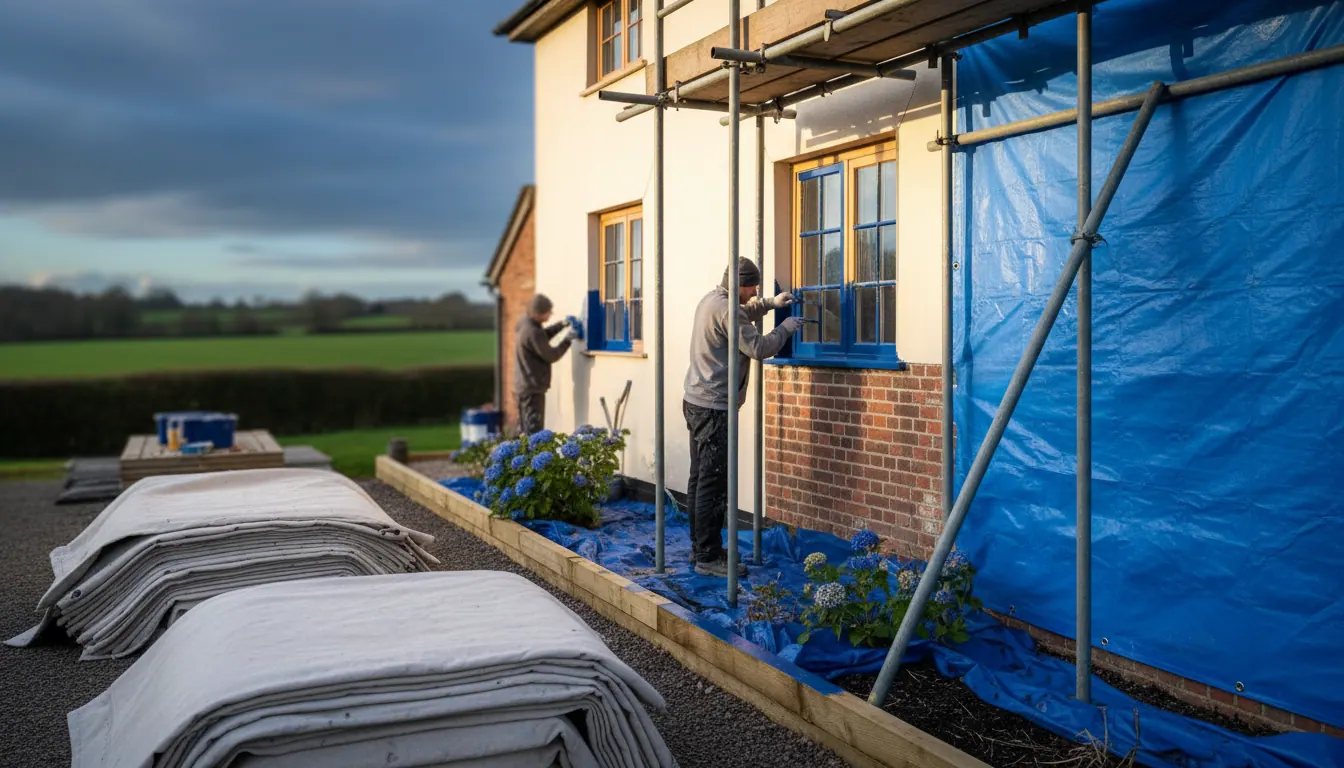
- Sheet everything down fully. Furniture, flooring, the lot. If you want to know more about how seriously we take that, the article on protecting your home while we work covers it in detail.
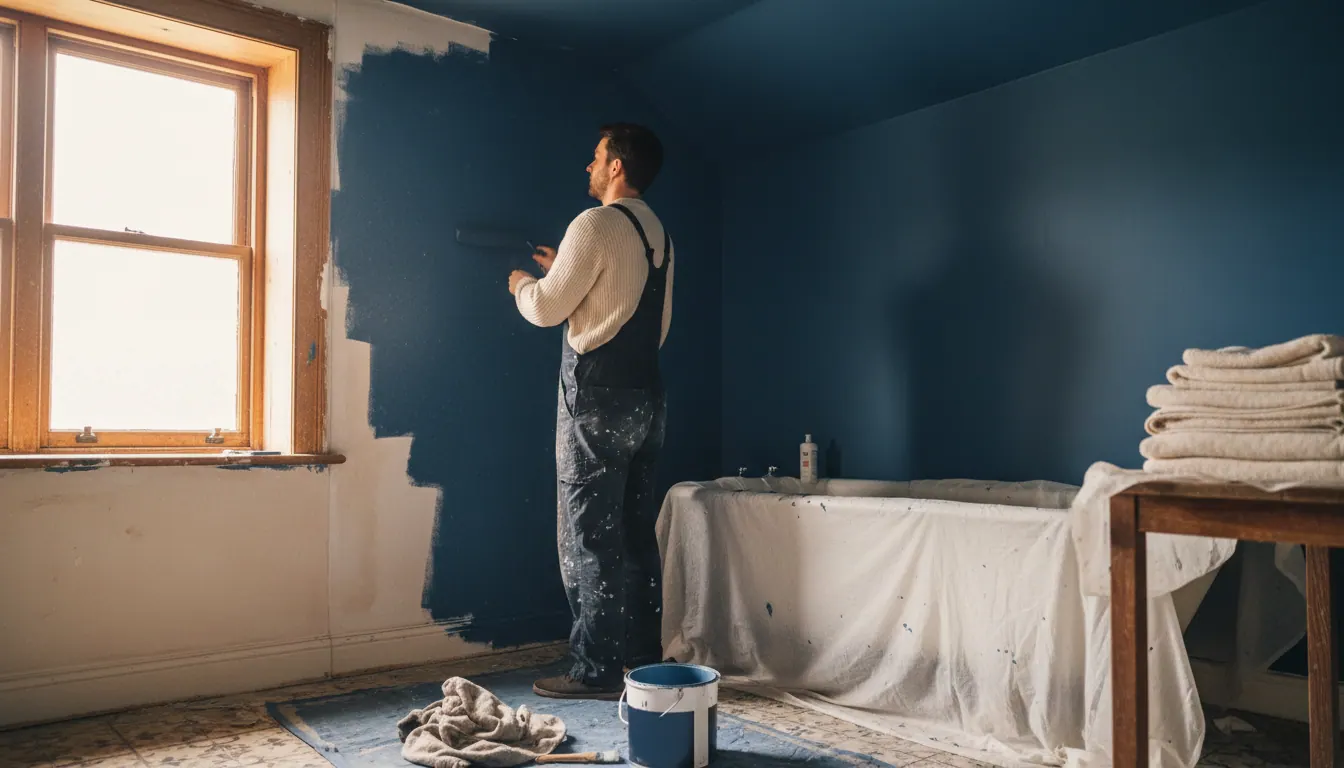
- Wash down walls and woodwork. Grease, dust and nicotine all need to come off before any new paint goes on.
- Fill cracks, nail holes and any damage to the plaster. Fine surface cracks are common in older properties around Farndon and Newark, especially in rooms that have seen a lot of temperature change over the years.
- Sand back any areas where old paint is flaking or where previous coats have built up unevenly around door frames and skirting boards.
- Apply the right primer or undercoat where needed. Bare filler, bare plaster and bare wood all need treating before a topcoat goes on, otherwise you get uneven sheen and poor adhesion.
None of this is glamorous. But skipping it is why people end up calling a decorator to repaint a room that was only done eighteen months ago.
Walls, ceiling and woodwork: doing it all at once
A lot of people ask whether it is worth doing just the walls, or whether the ceiling and woodwork should be done at the same time. The honest answer is that doing everything together almost always gives a better result and saves disruption in the long run.
When one element is freshly painted and the others are not, the contrast makes the older surfaces look worse than they did before. A newly painted wall next to yellowed woodwork just highlights the woodwork. A fresh ceiling next to tired, scuffed skirting boards does the same.
We work top to bottom: ceiling first, then walls, then woodwork. That sequence keeps any drips or splashes from landing on finished surfaces. Cutting in carefully where the ceiling meets the wall, and where the wall meets the skirting, is where a lot of the craft sits. Rolling is faster, but the cut-in lines are what people actually notice.
For woodwork in dining rooms, we tend to use a satin or eggshell finish rather than full gloss. It is more forgiving of minor surface imperfections, wipes down easily, and does not bounce light around the room the way high gloss can. That said, if the existing woodwork is gloss and you want to keep it that way, we can do that too. The preparation process for gloss is more involved because any imperfection is amplified, but the result can look very sharp when it is done well.
Colour choices for dining rooms in Farndon and the surrounding villages
We are not interior designers, and we will not tell you what colour to choose. But we can offer a few practical thoughts based on what works in rooms like yours.
Dining rooms in the villages around Newark tend to sit in older properties with higher ceilings and solid walls. That means they often hold warmth well and suit deeper, richer colours. Earthy terracottas, warm greens, dusty blues and deep neutrals have been popular choices lately, and they tend to look good in rooms that get evening use.
North-facing dining rooms are a different matter. They get less direct light and can feel cold with the wrong colour. Warmer whites, soft creams and pale ochres tend to work better than cool greys, which can make a north-facing room feel bleak in winter.
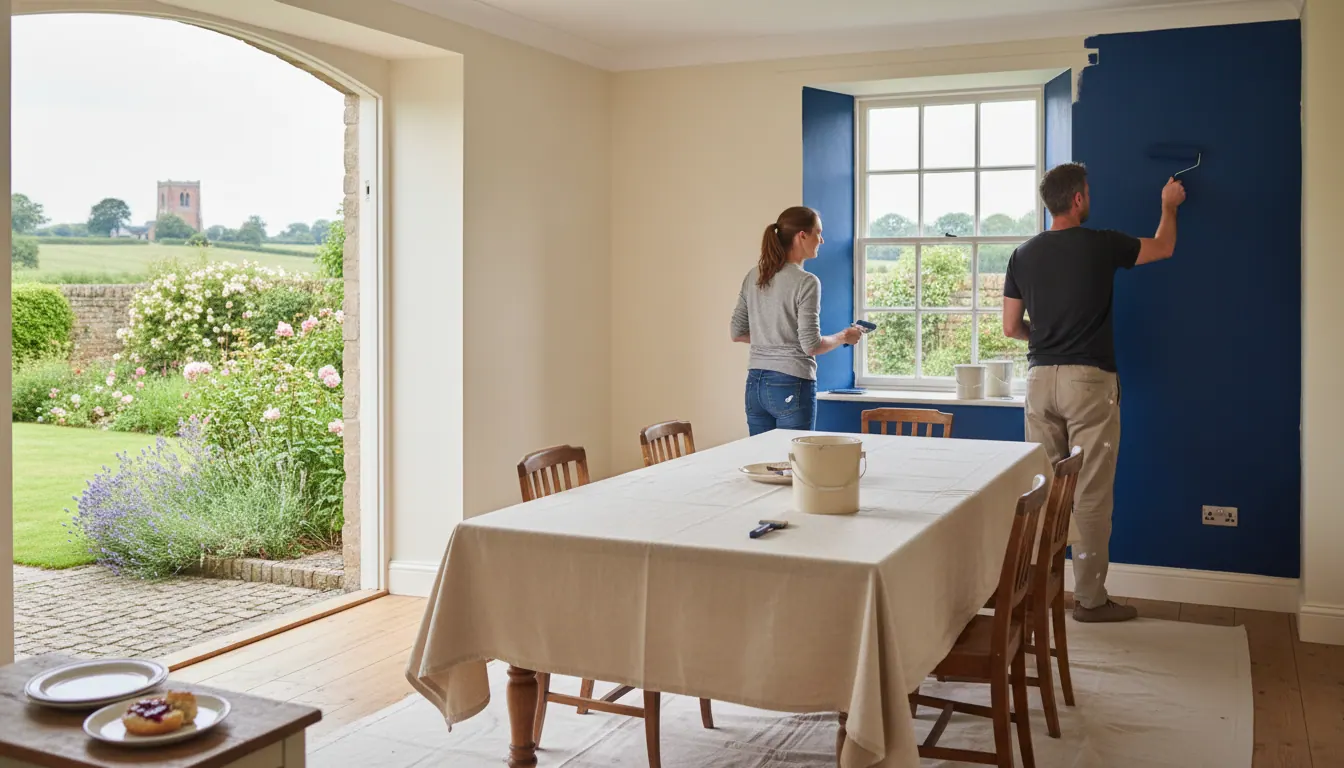
If you are thinking about a feature wall or a more dramatic colour on one wall, we are happy to discuss what is practical. Bear in mind that a single bold wall needs to be cut in very precisely to look intentional rather than unfinished.
What Linsey said
Linsey had us in to paint both her kitchen and dining room, and left this review on Facebook:
Jon did a great job of painting our kitchen and dining room, he was quick, efficient and tidy! And he was just a genuinely nice guy too. Would use again!
That combination of being efficient and being tidy matters more than it might sound. A dining room is not a spare room you can shut the door on. People need to get back in and use it. We work methodically so the room is disrupted for as short a time as possible, and we leave it clean enough to eat in that evening if need be.
If you are thinking about tackling the kitchen and dining room together, the article on painting a kitchen and dining room together explains exactly why that approach makes sense and what to expect from the process.
Frequently asked questions
Can you paint just one wall in my dining room, or do you need to do the whole room?
We can paint a single wall or a feature wall if that is what you want. The practical consideration is matching the existing paint on the other walls. If the current paint has been on for a few years, even the same tin of paint can dry to a slightly different shade. We will always be honest with you about whether a single wall is likely to blend in or whether it will create a visible contrast.
My dining room walls have some fine cracks. Does that need to be dealt with before painting?
Yes, and it is something we always address before any new paint goes on. Fine hairline cracks in plaster are common in older properties around Farndon, Hawton and Newark generally. We fill them, allow the filler to dry fully, sand it back flush and then prime the filled areas before applying topcoats. Painting straight over cracks just means the cracks reappear through the new paint within weeks.
How do I choose between matt and eggshell for dining room walls?
Matt emulsion hides surface imperfections better and gives a softer, more traditional look. Eggshell is more durable and easier to wipe clean, which makes it a sensible choice in rooms where the walls are likely to get touched or marked. Dining rooms are a good candidate for eggshell on the lower half of the wall if you have children or if chairs regularly push back against the wall. We are happy to talk through what suits your specific room.
Do you work in Farndon and the nearby villages, or just Newark itself?
We cover Farndon, Collingham, Balderton, Coddington, Fernwood, Winthorpe, Claypole, Long Bennington, Averham, Kelham, Elston, Hawton, Sutton-on-Trent and throughout Newark-on-Trent. If you are not sure whether you are within our area, just get in touch and ask.
Ready to get your dining room sorted?
If your dining room in Farndon or anywhere around Newark needs a proper refresh, we would be glad to come and have a look at what is needed. No obligation, no pressure, just a straightforward conversation about the job.
Call Jon on 07845 176906 and we will take it from there.