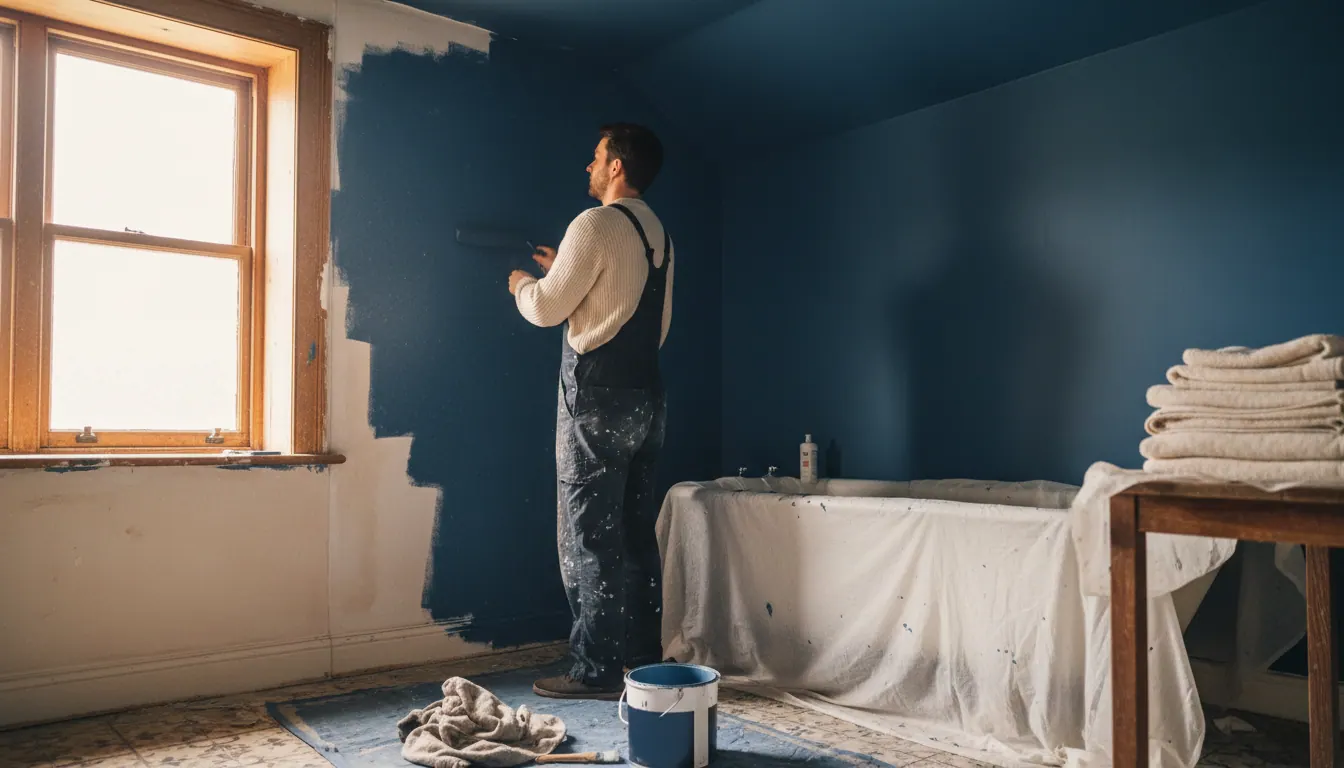
Protecting Your Home While We Work: Why Sheeting Down and Tidiness Matter in Older Newark Properties
Wondering how a decorator protects your home in Newark? Here's exactly what dust sheets, masking and prep look like when the job is done properly.

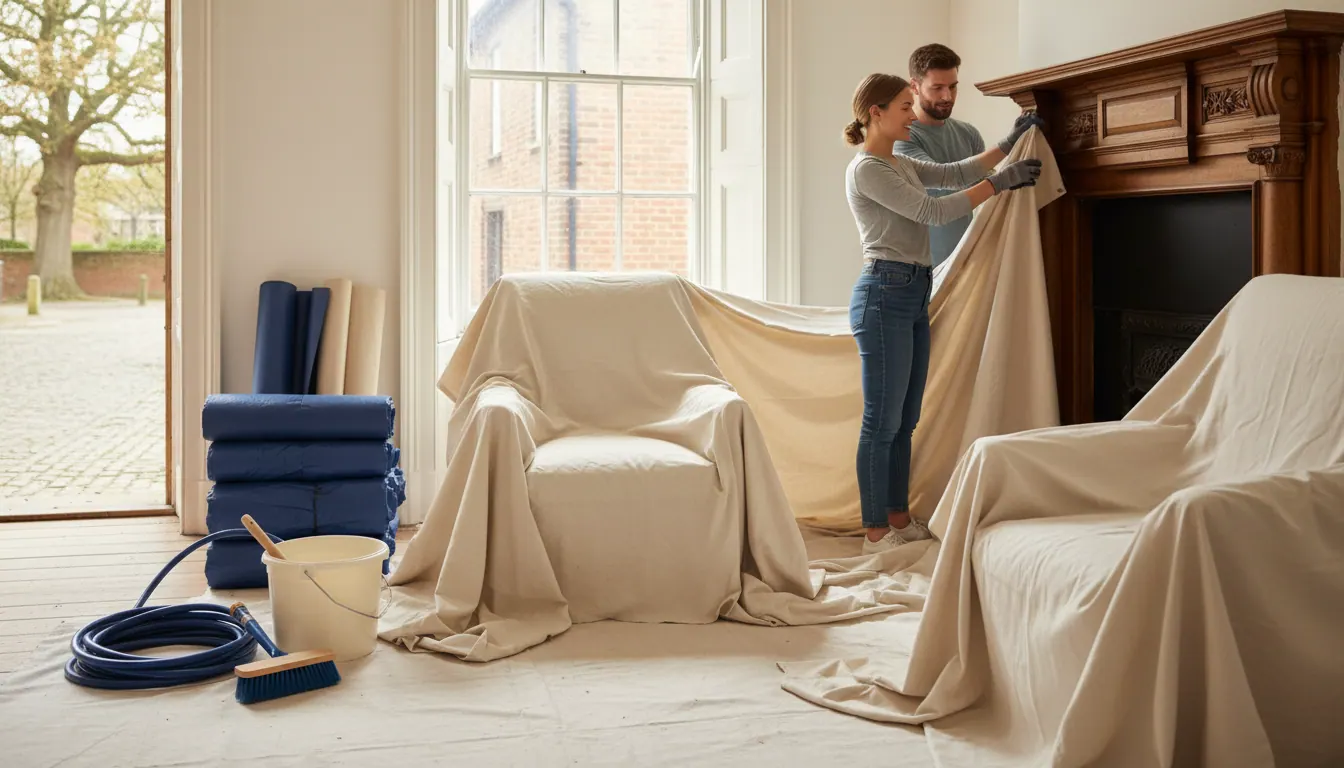
Sheeting down before a single brush is lifted
The first thing I do when I arrive at a job, whether it is a lounge in Balderton or a hallway in Fernwood, is sheet everything down. Before any paint comes out of the tin, before any sanding starts, your floor, furniture and fittings are covered. That is not an afterthought. It is the first step.
A lot of homeowners in and around Newark tell me the same thing when I turn up: they are not worried about the painting itself, they are worried about the mess. The splash on the carpet that was not there before. The gritty dust on the windowsill. The paint flick on the skirting board that was only just glossed. Those are the things that stick in the memory long after the new colour has dried.
So here is exactly how I approach dust and splash protection on every job.
What "sheeting down" actually means in practice
It sounds simple, but there is a right and a wrong way to do it. A sheet thrown loosely over a sofa does very little if it slides off the moment someone walks past. Here is what proper protection looks like:
- Floors. I use heavyweight canvas dust sheets on hard floors and carpet. Canvas sits flat and does not shift underfoot the way thin plastic does. Plastic sheeting can be slippery and it lets liquid paint bleed through if a drop lands on it. Canvas absorbs it.
- Furniture. Anything that cannot be moved out of the room gets covered with dust sheets and, where needed, secured so it stays put throughout the day.
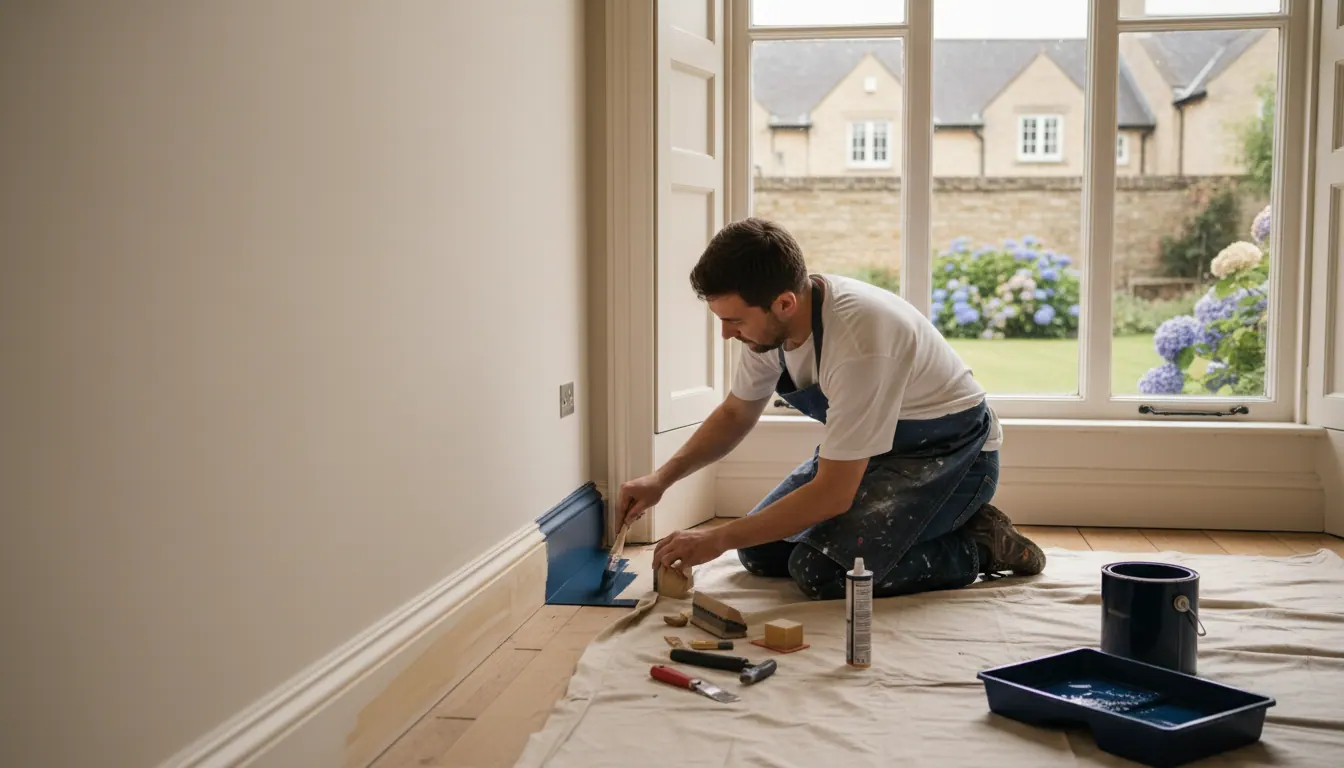
- Skirting boards and architraves. When I am painting walls, the skirtings get masked off. When I am glossing woodwork, the floor edge along the skirting gets covered too. The point is to protect whichever surface is not being painted right now.
- Light switches, sockets and fittings. These get masked with low-tack tape so there is no paint creep onto the covers.
- Carpets on stairs. This is where a lot of decorators cut corners. On hall, stairs and landing jobs I run sheets down each flight and secure them so they do not slip. The last thing anyone needs is a trip hazard on the staircase.
The goal is simple: when I leave at the end of the day, your home looks like a decorator has been in it, not like a building site.
Why this matters more in older Newark properties
A lot of the homes I work in across Newark-on-Trent, Collingham, Elston and the surrounding villages are older properties, period semis, terraces, Victorian and Edwardian houses with original floorboards, tiled hallways or fitted carpets that have been down for years. Dust and paint splashes on surfaces like those are not easy to fix. A tile stained with emulsion, a floorboard with a gloss drip, a carpet with a paint smear, these are the things that turn a good decorating job into a bad memory.
Older properties also tend to have more surface preparation involved. Sanding back woodwork, rubbing down walls before painting, filling cracks and holes. All of that generates dust. The way I manage it is by keeping the area of work contained, sheeting adjacent surfaces before I start any sanding, and cleaning up at the end of each day rather than leaving dust to settle overnight.
What Louise noticed (and why it is worth reading)
Louise Ellison had her living room woodwork refreshed and her hall, stairs and landing glossed. Her review says it better than I can:
Thank you for doing a great job of refreshing and glossing the woodwork in the living room and hall/stairs/landing. Work done in no time, with no splashes or damage to floor and carpets. Very efficient service, done by a thoroughly nice chap. More rooms to follow!
"No splashes or damage to floor and carpets." That is the line. It is not a small thing. Glossing woodwork on a hall, stairs and landing involves brushwork at floor level, at skirting height, around door frames and along bannisters, all in a space where carpets and flooring are right there. Getting through a job like that without a single splash takes preparation, not luck.
If you are thinking about getting your hall, stairs and landing done, our article on Painting Above the Stairs: How to Get It Right When Space Is Tight goes into more detail about how I approach the awkward angles and tight spaces involved.
Masking tape: where it goes and when it comes off
Low-tack masking tape is one of the most useful tools in a decorator's kit, but it has to be used correctly. Applied to the right surfaces, it gives you a clean paint line. Left on too long, it can pull paint with it when it comes off.
I always remove masking tape on the same day it goes down, ideally while the paint is still slightly tacky rather than fully cured. That gives the cleanest line. Tape left overnight, or for several days, is much more likely to lift the surface below it when it is peeled away.
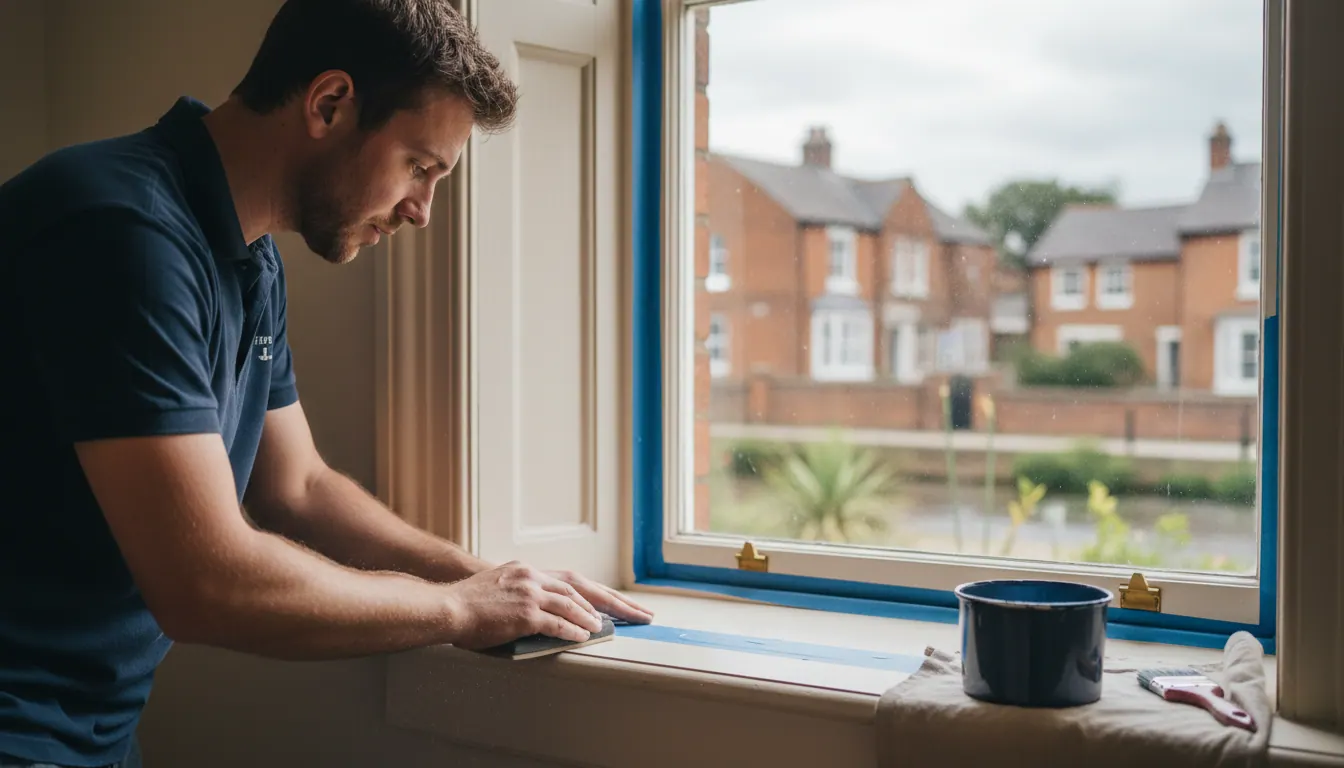
On a typical room repaint in Newark, I will use masking tape along the top edge of skirting boards when painting walls, around window frames and door frames, and along the ceiling line if I am not confident I can cut in cleanly enough by brush alone (though on a good surface I usually can). The tape comes off before I leave each day.
End-of-day clean-up: what you should expect
When I finish for the day, I tidy up. Sheets get folded and stacked neatly, not left trailing across the floor. Paint tins are closed and stored out of the way. Brushes and rollers are cleaned and wrapped. Any dust from sanding gets swept up or vacuumed before I go.
Julie Symcox's review of her lounge repaint captures what a working day should look like: "Jon arrived on time, sheeted down and worked all day." Arriving on time matters because it means the sheeting and preparation happen at the start of the day, not rushed at the last minute. Working all day means the job moves forward consistently. And the sheets going down first means everything that follows happens in a protected space.
If you are weighing up what a full sitting room or lounge refresh actually involves from start to finish, the article Refreshing Your Sitting Room: A Complete Guide to Walls, Ceiling and Woodwork walks through the whole process.
Decorator dust protection in Newark: what to ask before you book
If you are comparing decorators in Newark-on-Trent, Winthorpe, Claypole or anywhere else in the area, it is worth asking a few direct questions before you commit:
- Do you sheet down floors and furniture before you start?
- What do you use on carpets, canvas or plastic?
- How do you handle sanding dust?
- Do you tidy up at the end of each working day?
A decorator who does this properly will have straightforward answers. If the answers feel vague, that is worth noting.
Frequently asked questions
Do you protect carpets and furniture on every job, or just the bigger ones? Every job, regardless of size. Even a small repaint of one wall involves cutting in at skirting level, which means there is a carpet or floor right there. Sheets go down before I start, every time.
What do you use on carpets specifically? Heavyweight canvas dust sheets. They sit flat, they do not slip, and they absorb paint rather than letting it bleed through. On stairs I secure them so there is no trip hazard.
I have original Victorian floorboards in my Newark terrace. Will sanding woodwork damage them? Sanding woodwork does produce dust, and I take care to sheet adjacent surfaces before any rubbing down begins. At the end of each day I sweep and vacuum so dust does not settle overnight. The boards themselves are not touched by the sanding process; it is the woodwork, skirtings and architraves being prepared, not the floor.
How do I get a quote for decorator work in Newark or the surrounding villages? The best approach is to give me a ring. Every job is different, and I price each one individually once I have seen the rooms and understood what preparation is needed. That way the quote reflects the actual work rather than a rough guess.
Ready to book a decorator in Newark who leaves your home spotless?
If you are in Newark-on-Trent, Averham, Kelham, Sutton-on-Trent, Long Bennington or any of the surrounding villages, and you want a decorator who sheets down before he starts and cleans up before he leaves, I would be glad to hear from you. Call Jon on 07845 176906 and we can have a conversation about what you need.