Decorating a Hallway in Newark: Making an Entrance Count from Floor to Ceiling
Planning hallway decorating in Newark? We cover colours, prep, woodwork and what to expect when a local decorator works in your home.

Your hallway sets the tone for everything else
The moment someone steps through your front door, your hallway tells them everything about the house they are about to walk into. It is the first thing you see every morning and the last thing you see on your way out. Yet it is often the room that gets left until last, or skipped entirely during a refresh.
We cover hallway decorating across Newark-on-Trent and the surrounding villages, including Balderton, Farndon, Coddington, Fernwood and Collingham. Whether it is a narrow Victorian terrace entrance in Newark or a wider landing in a newer-build in Fernwood, the principles are the same: good preparation, the right colour choices, and woodwork that is finished cleanly.
This guide walks you through what hallway decorating actually involves, what colours are working well in local homes right now, and what to expect when you have a decorator in.
What hallway decorating actually involves
People sometimes assume a hallway job is just a quick coat of paint on the walls. In practice, it tends to be one of the more involved rooms in the house.
A typical hall, stairs and landing job includes:
- Walls and ceiling (often a high stairwell that needs careful access)
- Skirting boards and architraves
- Doors and door frames
- Bannisters and handrails, where painting is required
- The ceiling above the stairs, which can be tricky to reach safely
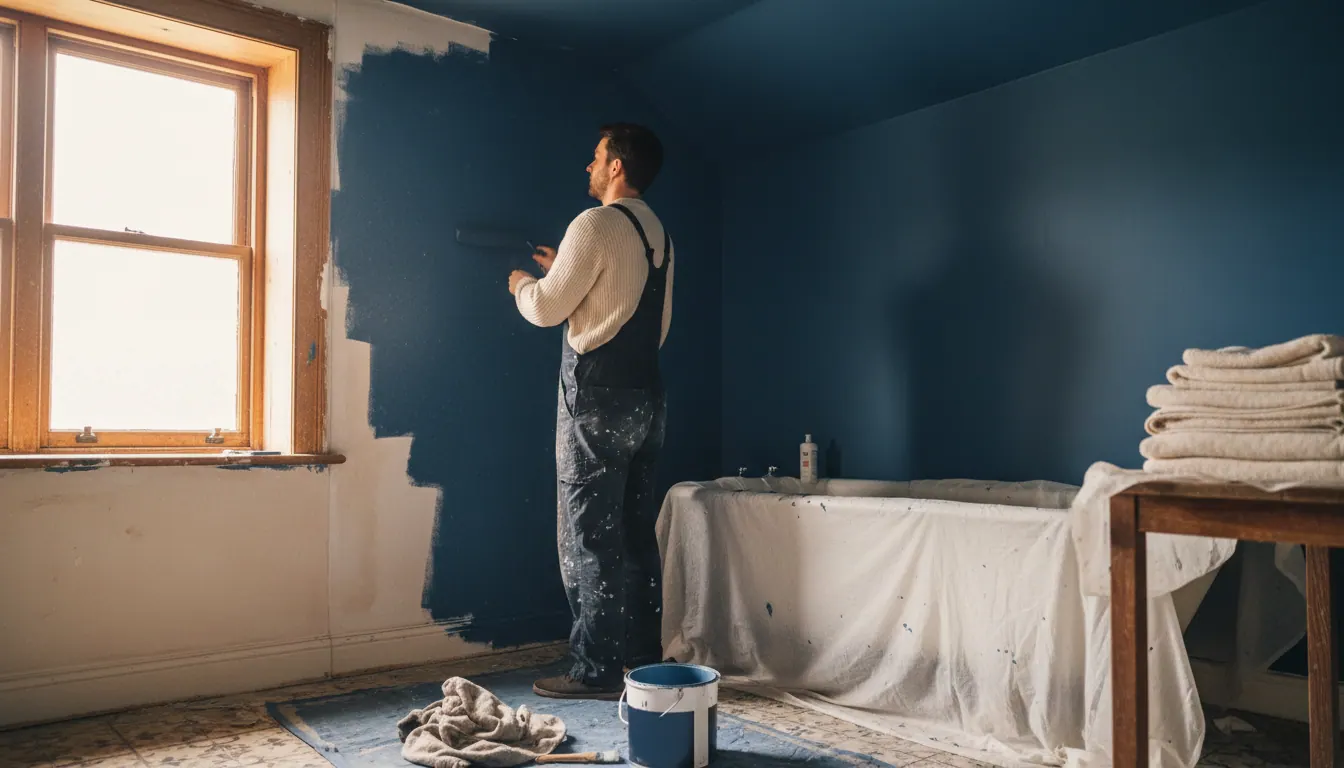
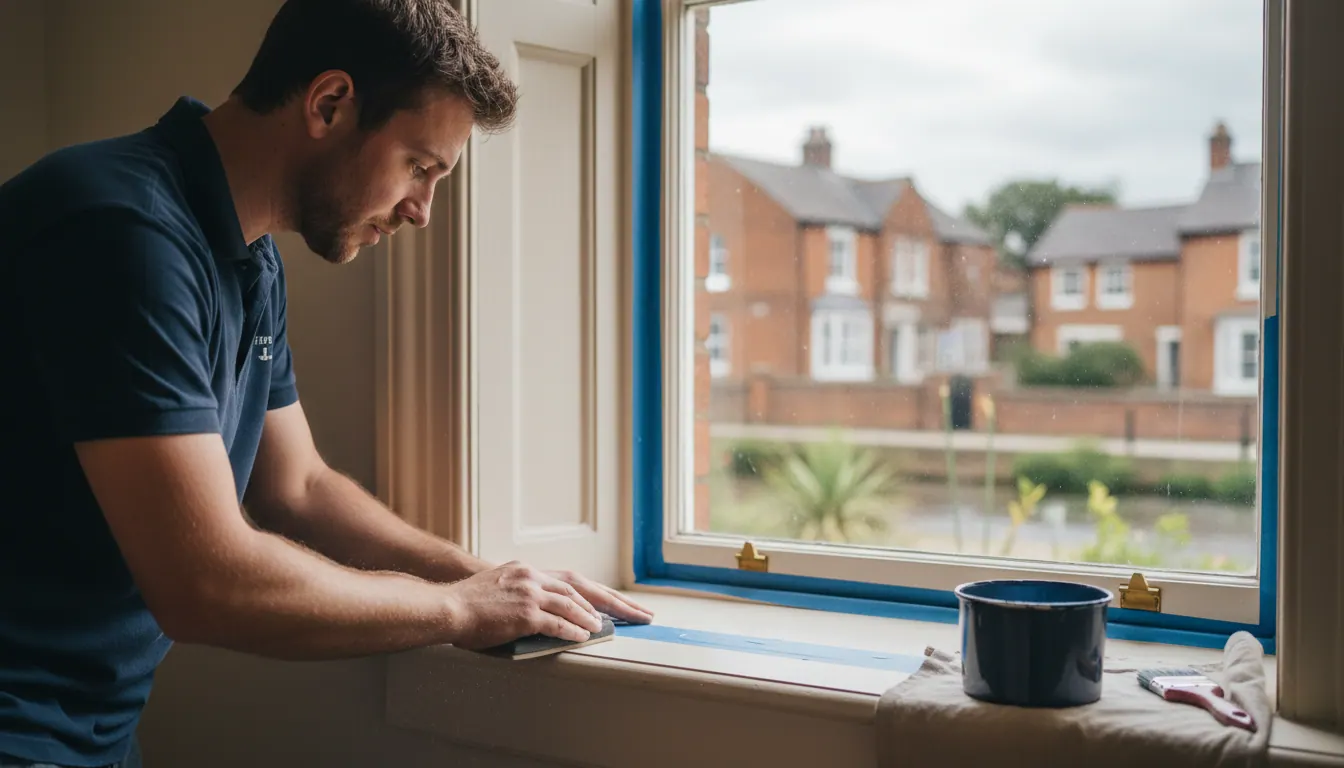
The prep work matters enormously. Hallways take more knocks than any other room. Scuffs on the walls, chips on the skirting boards, marks around light switches. Before any paint goes on, surfaces need to be cleaned, filled and sanded. Skimping on that stage is what causes a finish to look tired again within months.
If you want to understand more about how we protect your floors and furniture during this kind of work, our post on protecting your home while we work covers exactly that.
Painting above the stairs: why it needs care
The stairwell is the part of a hallway job that most people feel uncertain about. The ceiling height is often significant, and the angles are awkward. Getting a clean, even finish above a staircase requires the right equipment and a steady approach.
We have written a dedicated guide to this if you want the detail: Painting Above the Stairs: How to Get It Right When Space Is Tight.
The short version: it is absolutely doable, but it needs to be planned properly. Everything below gets sheeted down before any work starts above.
Colours that are working well in Newark hallways right now
This is the question we get asked most often. What should I put on the walls?
The honest answer is that there is no single right choice. It depends on how much natural light your hallway gets, how wide it is, and what connects to it. But there are some clear patterns in what Newark homeowners are choosing at the moment.
Warm neutrals and earthy tones are the dominant choice. Think clay, soft taupe, warm stone, and muted terracotta. These shades feel welcoming the moment you walk in and they hold up well against the inevitable scuffs and marks a busy hallway picks up. Cool greys, which were everywhere a few years ago, have largely given way to these warmer alternatives.
Moss and olive greens are appearing regularly in hallways, particularly in older properties. They work especially well in Victorian and Edwardian homes in Newark, where the original woodwork and stair details give them something to sit against.
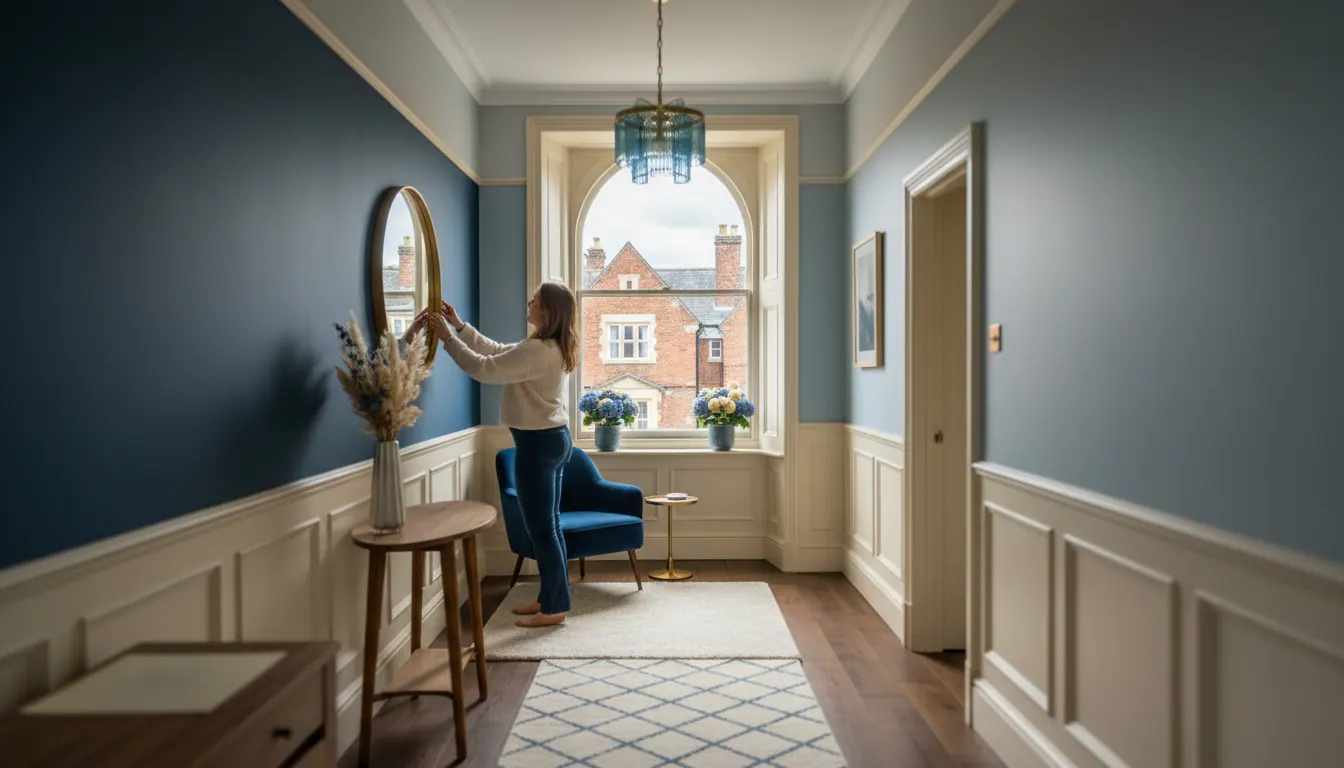
Deep, rich colours on a single feature wall or on the lower half of the wall (below a dado rail) can make a narrow hallway feel more considered rather than cramped. A dark navy, forest green or charcoal on the lower half with a soft warm white above is a combination that photographs well and feels good to live with.
White and off-white ceilings remain the default throughout. A bright white ceiling lifts the whole space, regardless of what is happening on the walls.
One practical note: if your hallway is genuinely small and dark, the instinct to paint it white is understandable but not always right. A warm mid-tone can make a narrow space feel more intentional. Bright white in a dark hallway sometimes just highlights the lack of light.
Woodwork: the detail that makes the difference
Skirting boards, architraves, bannisters and doors. The woodwork in a hallway takes more punishment than anywhere else in the house, and it shows. Chips, yellowing gloss, scuffs around the bottom of the door frames from shoes and bags.
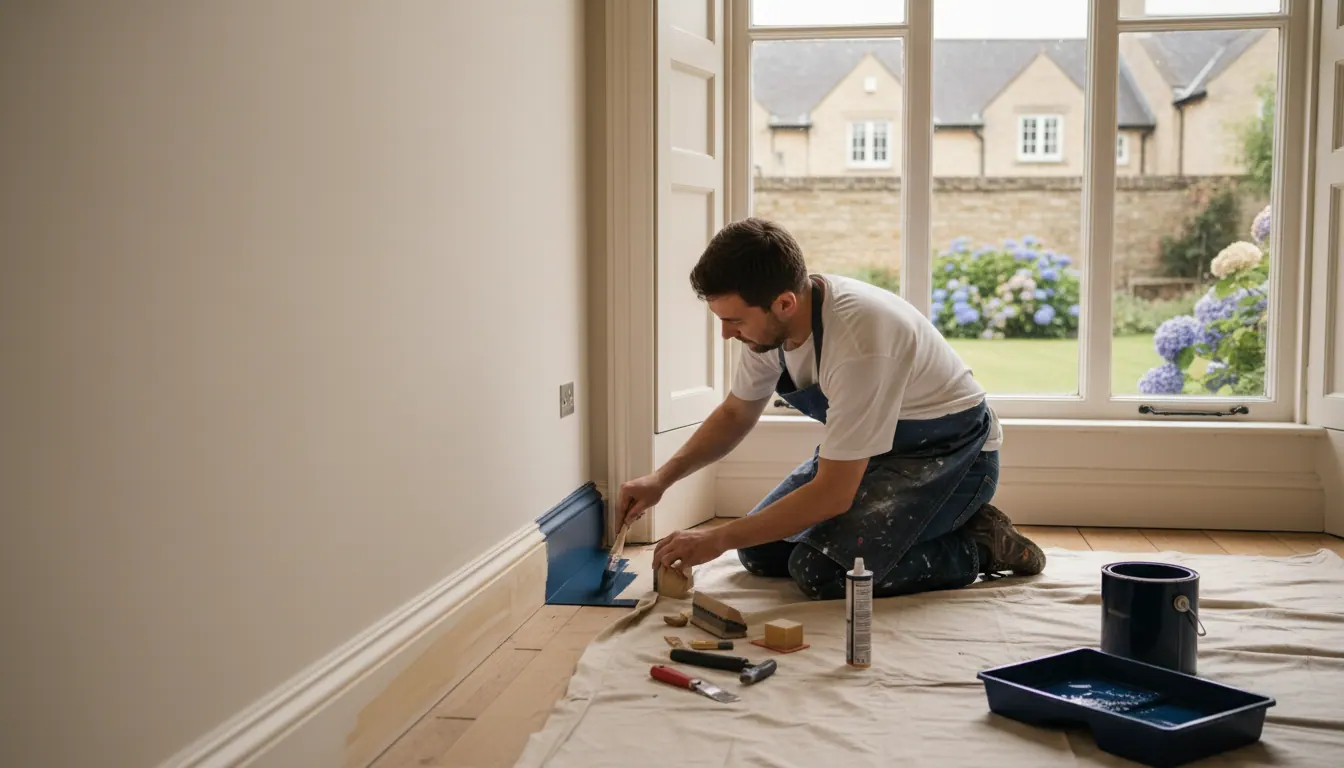
Getting the woodwork right is what separates a hallway that looks properly finished from one that still looks tired even after the walls have been done. The preparation involves filling, sanding and priming before any topcoat goes on. A well-applied satin or gloss finish on clean, prepped woodwork looks genuinely sharp.
Louise Ellison, one of our customers, had exactly this kind of job done, covering the living room and hall, stairs and landing:
"Thank you for doing a great job of refreshing and glossing the woodwork in the living room and hall/stairs/landing. Work done in no time, with no splashes or damage to floor and carpets. Very efficient service, done by a thoroughly nice chap. More rooms to follow!"
That last line says a lot. When the work is done carefully, no damage to carpets or floors, and the result looks right, people come back for the next room.
Small hallways: practical ideas that actually work
A lot of homes in Newark and the surrounding villages have compact hallways. Terraced houses in Newark town centre, semi-detached properties in Balderton, bungalows in Winthorpe. The hallway is often just a corridor.
A few things that make a real difference in a small space:
- Keep the ceiling light. A pale or white ceiling always makes the space feel taller.
- Use one colour throughout. Carrying the same wall colour from the hall into the stairwell and landing creates a sense of continuity that makes the whole area feel larger.
- Consider a mid-sheen finish on the walls. A very slight sheen reflects a little more light than a flat matt, which can help in a dark entrance.
- Do not neglect the doors. A freshly glossed door and frame in a small hallway makes an immediate difference. It is a contained surface and the contrast against clean walls is striking.
If you are thinking about a similar approach in your sitting room or living room, our guide to refreshing your sitting room covers the same principles in more depth.
What to expect when we decorate your hallway
A hallway job is not disruptive in the way a kitchen or bathroom renovation is. You can still move through your house. But it does need a bit of planning.
Before we start, everything gets sheeted down. Floors, carpet on the stairs, any furniture that cannot be moved. The skirting boards and door frames get masked where necessary. We work through the job methodically: preparation first, then ceilings, then walls, then woodwork.
We are in and out of the front door throughout the day, so if you have a specific concern about security or access, just mention it before we start and we will work around it.
The hallway is the one room where neighbours and visitors will notice the result immediately. That is a good reason to get it right.
Frequently asked questions about hallway decorating in Newark
What is the most welcoming colour for a hallway?
Warm neutrals tend to work best. Shades in the clay, taupe, warm stone and soft terracotta range feel genuinely welcoming because they are neither stark nor gloomy. They also hold up better against the marks and knocks a busy hallway picks up than a bright white does. The best choice for your specific hallway depends on how much natural light it gets, which we can advise on when we visit.
What are the trends for hallway decorating in 2026?
The direction is away from cool, flat greys and towards warmer, earthier tones. Moss greens, clay, warm whites and deep feature shades are all appearing regularly. There is also a renewed interest in making the woodwork a feature rather than an afterthought: a well-finished gloss or satin on skirting boards and door frames in a contrasting colour to the walls can look genuinely smart. Bold, single-colour approaches that carry one shade across the walls, ceiling and woodwork are also becoming more common in smaller hallways.
What is the 3-5-7 rule in interior decorating?
It is a guideline for balancing colours in a room: roughly 70% of the space in a dominant colour (usually the walls), 20% in a secondary colour (woodwork, doors, or a feature wall), and 10% in an accent (smaller details). In a hallway, this translates simply. The wall colour takes the dominant share, the woodwork colour is the secondary, and any accent detail (a front door in a contrasting shade, for instance) is the smaller element. It is a useful way to think about balance rather than a rigid rule.
Do you cover villages outside Newark for hallway decorating jobs?
Yes. We work across the Newark area, including Claypole, Long Bennington, Sutton-on-Trent, Averham, Kelham, Hawton and Elston, as well as the larger villages like Collingham and Balderton. If you are unsure whether we cover your area, just ring and ask.
Ready to get your hallway looking right?
If your hallway has been at the bottom of the to-do list for a while, it is worth bumping it up. It is one of the most used spaces in any home and one of the most noticeable when it is done well.
We are fully insured and cover Newark-on-Trent and the surrounding villages. To have a chat about what your hall, stairs and landing needs, call us on 07845 176906 and we will take it from there.